
Chicago has emerged as a major technology hub, home to innovative software development agencies serving everyone from ambitious startups to Fortune 500 enterprises. The city’s central location, diverse economy, and world-class talent pool from universities like Northwestern and University of Chicago have created a thriving software development ecosystem.
Whether you’re building a custom enterprise application, modernizing legacy systems, or launching a mobile product, Chicago’s software agencies offer the technical expertise and strategic thinking to bring your vision to life—with the added benefit of Midwest values like straightforward communication and reasonable pricing.
We evaluated Chicago’s software development landscape to bring you this definitive top 5 list. We assessed technical capabilities, client portfolios, industry recognition, Clutch ratings, and project outcomes to identify the city’s premier software development partners.
What Makes a Great Chicago Software Agency?
Deep Technical Expertise Across Modern Stack
Elite Chicago agencies don’t just code—they architect scalable solutions using modern technologies. Look for teams with expertise in cloud platforms (AWS, Azure, GCP), modern frameworks (React, Node.js, .NET), mobile development (iOS, Android, React Native), and emerging technologies like AI/ML and data analytics. The best agencies stay current with technology trends while having deep experience with proven enterprise stacks.
Proven Track Record with Complex Projects
Chicago agencies have cut their teeth on diverse challenges—from healthcare systems requiring HIPAA compliance to financial platforms handling millions of transactions. Experience matters when building mission-critical software. Look for agencies with case studies demonstrating they’ve solved problems similar to yours, managed complex integrations, and delivered scalable solutions that grow with business needs.
Agile Development Process and Transparency
Top Chicago shops embrace agile methodologies, delivering software iteratively with frequent feedback loops. They provide transparency through sprint reviews, demo sessions, and project management tools that give you real-time visibility. Avoid agencies that disappear for months and emerge with something that doesn’t match requirements—great partners involve you throughout development.
Strategic Thinking Beyond Just Coding
The best agencies approach projects strategically, not just technically. They ask about business objectives, user needs, and success metrics before writing code. They recommend the right architecture for your scale and budget, advise on build-vs-buy decisions, and think about long-term maintenance and evolution. This strategic counsel often saves more money than it costs.
Post-Launch Support and Partnership Mentality
Software delivery isn’t the finish line—it’s the starting point. Elite agencies offer ongoing support, monitoring, optimization, and feature development. They think like long-term partners invested in your success, not vendors completing transactions. Look for agencies with multi-year client relationships and testimonials praising their responsiveness and continued collaboration.
Top 5 Chicago Software Agencies in 2025
1. Table XI (TXI)
Website: tablexi.com
Location: 10 S Riverside Plaza, Suite 875-7670, Chicago, IL 60606
Founded: 2002
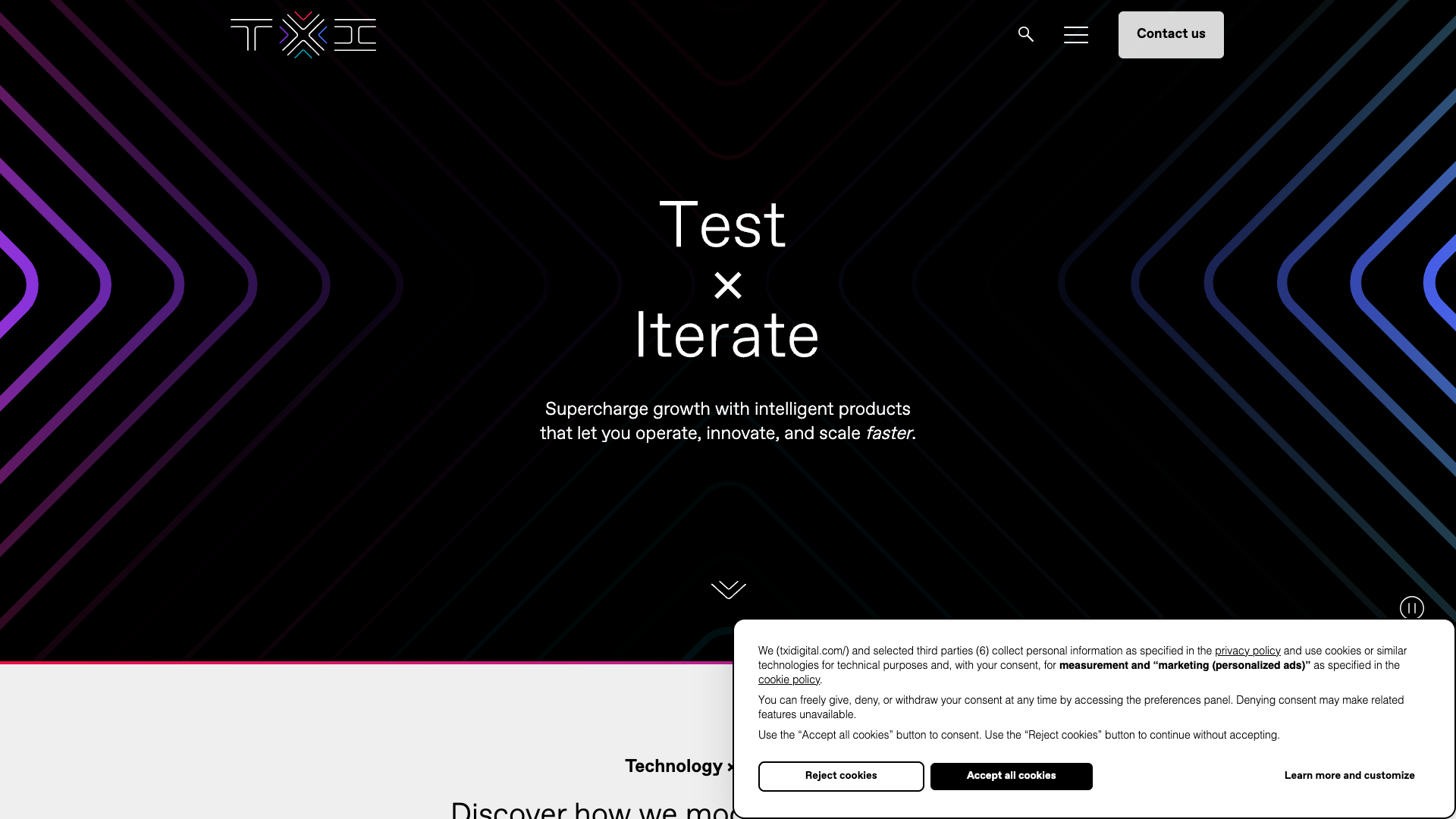
Why They’re #1: Table XI stands out as the only 100% employee-owned software agency in Chicago through their ESOP structure. This unique ownership model aligns every team member with client success, creating exceptional commitment and retention. With 20+ years of experience and long-term partnerships (some lasting over a decade), TXI combines technical excellence with human-centered design to deliver transformational digital products.
Key Services:
- Digital strategy & product innovation
- Custom web application development
- Mobile application development (iOS & Android)
- Data management & analytics platforms
- Experience-led design and UX/UI
- Business strategy consulting
- Digital transformation
Technology Stack: Ruby on Rails, React, JavaScript, native mobile development (iOS/Android), data analytics platforms, modern cloud infrastructure
Industries Served:
- Healthcare and medical devices
- Innovation/Startups
- Retail & e-commerce
- Manufacturing & IoT
- Education and EdTech
Team Size: 75 employees
Pricing:
- Minimum project: $50,000+
- Hourly rate: $200-$300
- Typical projects: $10,000 to $800,000+
Best For: Companies seeking a strategic partner for complex digital products, especially those valuing long-term relationships and human-centered design approach.
Notable Achievements:
- 100% employee-owned ESOP company (entirely owned by employees)
- Recognized as #1 custom software developer in Chicago
- 100+ startups and SMBs served globally
- Multi-year client partnerships (some exceeding 10 years)
- Strong focus on healthcare, manufacturing, and e-commerce sectors
- Experience-led design approach combining strategy with execution
2. 8th Light
Website: 8thlight.com
Location: 25 E Washington St, Suite 509, Chicago, IL 60602
Founded: 2006
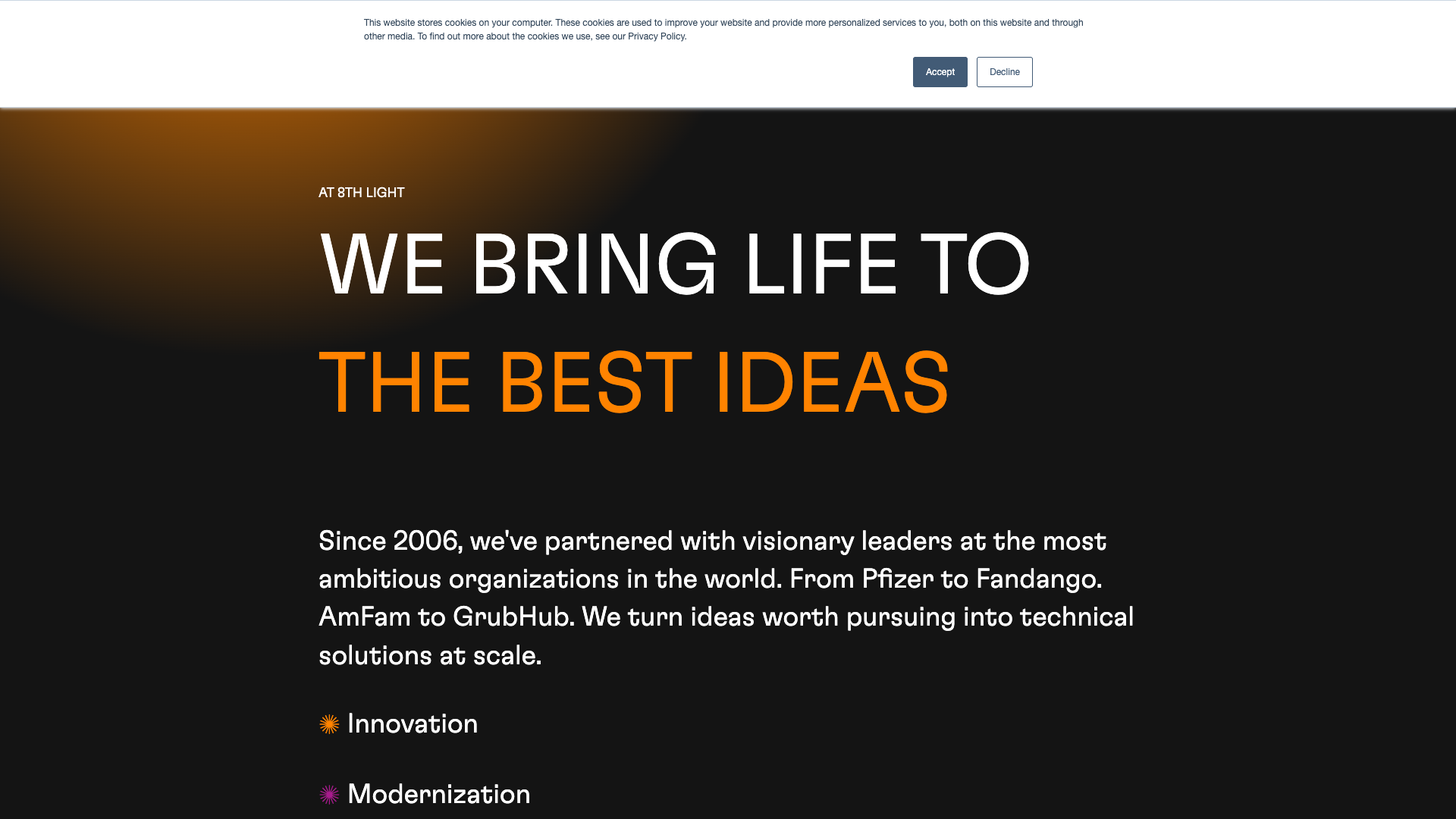
Why They’re #2: 8th Light has built a reputation for software craftsmanship—an unwavering commitment to code quality, testing, and long-term maintainability. Their renowned apprenticeship program develops world-class developers who treat software as a craft, not just a job. With impressive results like reducing Fidelity Life’s application process from 8-12 weeks to 20 minutes, they prove that technical excellence drives business transformation.
Key Services:
- Custom software development
- Software craftsmanship consulting
- Digital transformation
- Mobile & web application development
- Cloud architecture and migration
- Technical training & apprenticeship programs
- Legacy system modernization
Technology Stack: Java, Ruby, JavaScript, Python, iOS, Android, React, modern cloud platforms, microservices architecture
Industries Served:
- Healthcare and pharmaceuticals
- Financial services and insurance
- Media and entertainment
- Education
- Enterprise technology
Team Size: 140+ employees (distributed across Chicago, London, New York, Los Angeles, Austin)
Pricing: Premium pricing (higher than average Chicago rates); uses innovative “fixed feature” pricing where clients pay per feature with predetermined point costs
Best For: Enterprises tackling complex technical challenges requiring exceptional code quality, technical rigor, and long-term maintainability—especially financial services, healthcare, and regulated industries.
Notable Achievements:
- 15-year partnership with Fidelity Life (reduced application time from 8-12 weeks to 20 minutes)
- Clients include Pfizer, Fandango, AmFam, GrubHub, Avant, Enova International, GoodRx, Hypixel Studios
- Renowned apprenticeship program setting industry standards
- Remote-first culture with optional office spaces
- Strong emphasis on software craftsmanship and engineering excellence
- Active contributor to open-source community
3. SPR
Website: spr.com
Location: 233 S Wacker Drive, Suite 3500, Chicago, IL 60606
Founded: 1973
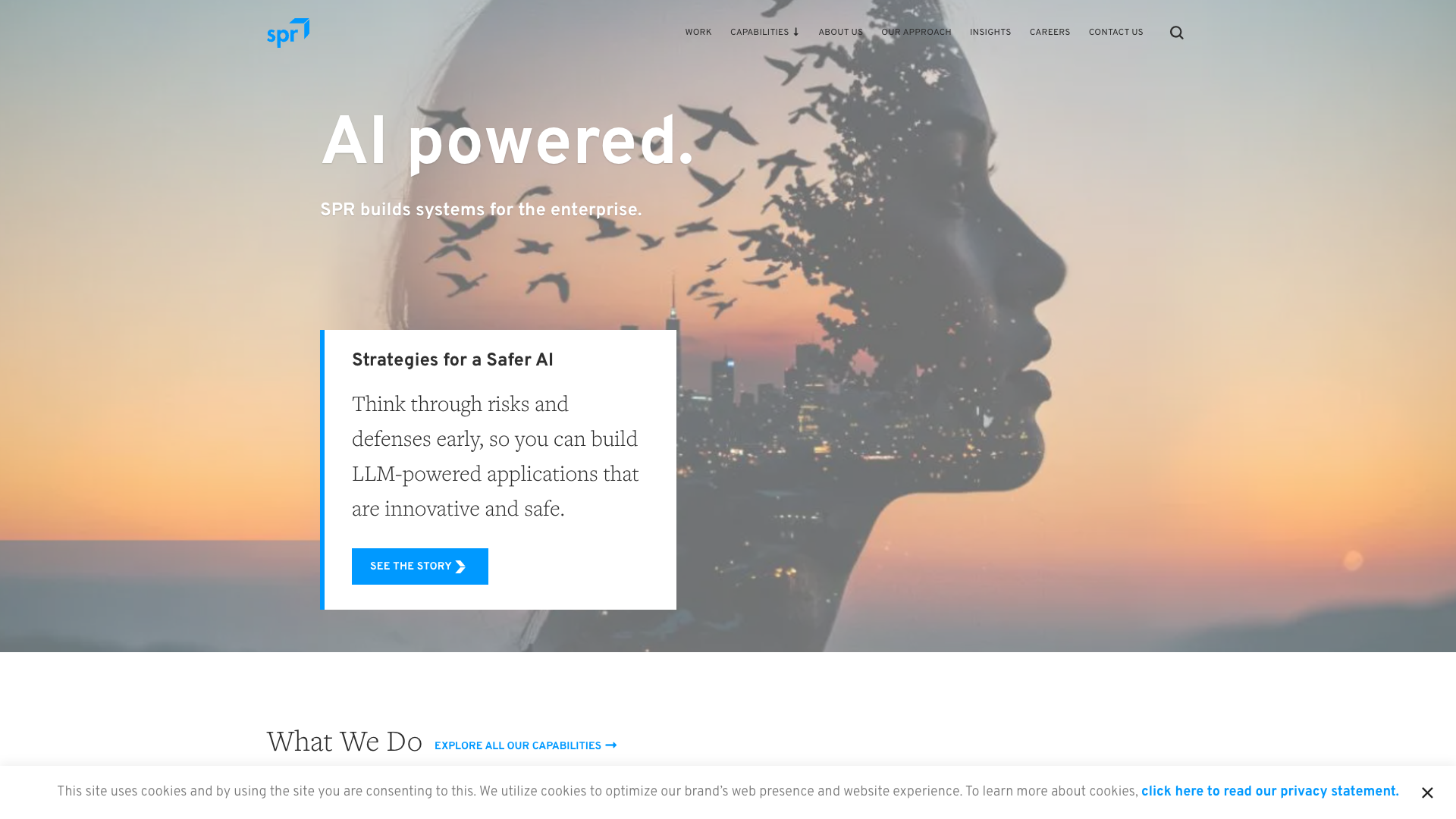
Why They’re #3: With over 50 years of experience and 433 employees across 6 continents, SPR is Chicago’s most established software consultancy. They’ve evolved from traditional IT services to become AI-powered enterprise modernization specialists. Their longevity provides institutional knowledge of complex enterprise systems, while their investment in AI/ML capabilities positions them at the cutting edge of 2025’s technology landscape.
Key Services:
- Technology modernization and transformation
- Custom software development
- Cloud consulting & infrastructure (Microsoft Azure specialists)
- Data & analytics platforms
- AI and machine learning integration
- User experience design
- Salesforce consulting and development
Technology Stack: Microsoft Azure, Salesforce, Java, Spring Boot, .NET, Git, cloud-native architectures, AI/ML frameworks, modern DevOps tools
Industries Served:
- Financial services and banking
- Healthcare and life sciences
- Insurance
- Manufacturing and industrial
- Oil & Gas
- Transportation and logistics
- Utilities
- Pharmaceuticals
- Telecommunications
- Fintech
Team Size: 433 employees across 6 continents
Pricing:
- Minimum project: $25,000+
- Hourly rate: $150-$199
- Broad range accommodating various project sizes
Best For: Large enterprises needing comprehensive digital transformation, legacy system modernization, or AI-powered solutions with a proven partner having deep enterprise experience.
Notable Achievements:
- 50+ years in business (founded 1973) - Chicago’s most established firm
- 433 employees providing enterprise-scale capabilities
- Named Best Place to Work by Built In Chicago
- 100+ clients including major corporations and Chicago startups
- Strong expertise in AI/ML integration for enterprise applications
- Microsoft Azure partnership and deep Salesforce capabilities
- 8 verified Clutch reviews praising technical depth and business impact
4. Made in Tandem
Website: madeintandem.com
Location: 20 N. Upper Wacker Dr, Suite 1200, Chicago, IL 60606
Founded: 2011
Why They’re #4: Made in Tandem (formerly DevMynd) has earned trust from the most demanding clients—the US Department of Defense, Motorola Solutions, and IBM. Their expertise in mission-critical systems, complex data engineering, and secure government applications demonstrates exceptional technical capability. The recent brand evolution to “Made in Tandem” signals their maturity and continued growth in the enterprise space.
Key Services:
- Custom software development
- Cloud services & infrastructure (AWS/Azure)
- Data strategy & analytics
- Product discovery & management
- Team augmentation and staff augmentation
- DevOps and continuous delivery
- Government/defense software systems
Technology Stack: Modern web frameworks, cloud platforms (AWS/Azure), data engineering tools, microservices, containerization (Docker/Kubernetes), secure development practices
Industries Served:
- Government and defense
- Technology and enterprise software
- Manufacturing and industrial
- Healthcare
- Sports and entertainment
- Education (University of Chicago Booth School of Business)
Team Size: 36 employees (11-50 range)
Pricing:
- Minimum project: $100,000+
- Hourly rate: $150-$199
- Typical projects: $175,000 to $450,000+
Best For: Organizations building mission-critical applications, complex data systems, or requiring government/defense-grade security and reliability standards.
Notable Achievements:
- US Department of Defense contractor (demonstrates security clearances and technical rigor)
- Clients include Motorola Solutions, IBM, Verizon, CareerBuilder, University of Chicago Booth, Bayer, MLB
- 9 verified Clutch reviews highlighting accurate estimates, fast delivery, quality processes
- Evolved from “Tandem” to “Made in Tandem” brand (2024)
- Strong expertise in data engineering and analytics
- Agile development with human-centered design approach
5. Caxy Interactive
Website: caxy.com
Location: 212 W Van Buren St, Chicago, IL 60607
Founded: 1999
Why They’re #5: Caxy Interactive has carved out a unique niche serving industrial and manufacturing companies scaling to $1B revenue. Their specialized “Game Changer Assessment” helps manufacturers, distributors, and construction firms identify digital transformation opportunities. With 25+ years of experience, AI/ML capabilities, and competitive pricing ($50K+ minimums), Caxy offers exceptional value for mid-market industrial companies.
Key Services:
- Technology strategy & consulting
- Product design sprints
- Custom software development
- AI & machine learning solutions
- DevOps and continuous integration
- Data & analytics platforms
- Open-source CMS and e-commerce development
Technology Stack: .NET, C++, Spring Boot, Google Cloud Platform, AngularJS, D3.js, Apache, open-source platforms (Drupal, WordPress, Magento)
Industries Served:
- Manufacturing and industrial
- Distribution and logistics
- Construction
- Fintech and insurtech
- Healthcare
- HR Technology
- Higher education
- Nonprofit organizations
- Startups
Team Size: 33-34 employees
Pricing:
- Minimum project: $50,000+
- Typical projects: $50,000 to $400,000+
- Competitive mid-market pricing
Best For: Industrial and manufacturing companies needing digital transformation, mid-market businesses seeking strong value and specialized industry expertise, or organizations requiring AI/ML integration.
Notable Achievements:
- 25+ years in business (founded 1999)
- Ranked Top 3 software companies in Chicago by Clutch
- Clutch Global 1000 (top 1% of tech companies globally)
- Built In Best Places to Work 2024
- Acquia Partner of the Year (Field Museum project)
- Proprietary “Game Changer Assessment” for industrial sector
- Specialized focus on companies scaling from mid-market to $1B+
- Strong AI/ML capabilities combined with industry expertise
Why Choose a Chicago Software Agency?
Midwest Values Meet Technical Excellence
Chicago agencies combine coastal-quality technical expertise with Midwest authenticity. You get straightforward communication without the hype, transparent pricing without hidden fees, and genuine partnership without sales-y overselling. Chicago developers pride themselves on delivering what they promise, on time and on budget, with honest communication when challenges arise.
Competitive Pricing Compared to Coastal Markets
Chicago’s cost of living is significantly lower than San Francisco or New York, translating to better value for software development. Hourly rates typically range $150-$300 compared to $250-$500+ on the coasts. This 30-50% cost advantage doesn’t mean lower quality—it reflects regional economics, not capabilities. You get enterprise-grade development at mid-market prices.
Central Location and Time Zone Advantage
Chicago’s central time zone (CST) provides overlap with both coasts, making collaboration easier for distributed teams. Companies on the East Coast get afternoon overlap, while West Coast companies have morning sync time. Chicago’s O’Hare and Midway airports offer direct flights nationwide, facilitating on-site kickoffs, sprint reviews, or stakeholder meetings when needed.
Diverse Industry Experience
Chicago’s economy spans finance, healthcare, manufacturing, logistics, insurance, and professional services—giving local agencies exposure to diverse industries and business models. This breadth translates to versatile problem-solving skills. Chicago agencies understand enterprise complexity, regulatory requirements, and industry-specific challenges across multiple sectors.
Access to Top-Tier Talent
Chicago attracts talent from world-class institutions: University of Chicago, Northwestern, University of Illinois, and strong coding bootcamps. The city’s tech scene has matured with major companies (Google, Salesforce, Microsoft) establishing engineering hubs, creating a deep talent pool of developers with both startup agility and enterprise experience.
How to Choose the Right Chicago Software Agency
Step 1: Define Your Project Scope and Technical Requirements
Be specific about what you’re building:
- Type of software: Web application, mobile app, enterprise system, data platform, AI/ML solution
- Key features: Critical functionality and integrations required
- Technical constraints: Must integrate with legacy systems, specific compliance requirements (HIPAA, SOC 2)
- Scale expectations: Number of users, transaction volume, data requirements
- Timeline: Launch deadline or phased rollout approach
Clear requirements help agencies provide accurate estimates and proposals.
Step 2: Assess Technical Expertise in Your Stack
Different agencies specialize in different technologies. Ask:
- “What’s your experience with [your required technology stack]?”
- “Can you share similar projects using these technologies?”
- “How do you stay current with technology changes?”
- “What’s your approach to technology selection and architecture decisions?”
Review their portfolio for projects using similar technologies at comparable scale.
Step 3: Evaluate Development Process and Project Management
Understanding how they work prevents misalignment. Ask about:
- Development methodology: Agile/Scrum, Kanban, or hybrid approaches
- Communication cadence: Daily standups, weekly demos, sprint reviews
- Project management tools: Jira, Asana, or other platforms for transparency
- Quality assurance: Testing strategies, code reviews, QA processes
- Timeline and milestones: How they break projects into deliverable phases
Ensure their process aligns with how your team works and provides adequate visibility.
Step 4: Review Client References and Case Studies
Request 3-5 references for projects similar in technology, complexity, and industry. Ask references:
- “Did they deliver on time and on budget?”
- “How did they handle unexpected technical challenges?”
- “What was the quality of their code and documentation?”
- “How was communication throughout the project?”
- “Are you still working with them post-launch?”
- “Would you hire them again?”
Look for specific outcomes: successful launches, performance improvements, business metrics impact.
Step 5: Understand Team Structure and Staffing
Know who’s actually building your software. Ask:
- “Who will be on my project team?” (developers, designers, PM, QA)
- “What’s the seniority mix?” (senior vs. junior developers)
- “Will team members be dedicated or shared across projects?”
- “How do you handle team continuity if someone leaves?”
- “Can I interview the proposed team before committing?”
Avoid bait-and-switch scenarios where senior people pitch but junior staff deliver.
Step 6: Compare Pricing Models and Total Investment
Chicago agencies use various pricing structures:
Fixed-price projects: Total cost for defined scope ($50K-$500K typical range)
- Pros: Budget certainty, clear deliverables
- Cons: Less flexibility, scope changes cause conflicts
Time & materials: Hourly rates × hours worked ($150-$300/hour typical)
- Pros: Flexibility to evolve requirements
- Cons: Less budget predictability
Retainer agreements: Monthly fee for ongoing development ($15K-$50K/month typical)
- Pros: Dedicated capacity, long-term partnership
- Cons: Unused hours may be wasted
Hybrid: Fixed-price discovery phase, then time & materials for development
- Pros: Balanced approach reducing risk on both sides
- Cons: Requires two commitment points
Get detailed proposals comparing total investment, what’s included, payment schedules, and change order processes.
Step 7: Evaluate Post-Launch Support Options
Software needs ongoing maintenance, monitoring, and evolution. Understand:
- Support packages: What’s included in ongoing support?
- Response SLAs: How quickly do they respond to critical issues?
- Retainer options: Cost for continued development after launch
- Knowledge transfer: Will they train your team to maintain the software?
- Hosting and infrastructure: Who manages servers and deployment?
Clarify support terms before launch to avoid scrambling when issues arise.
Red Flags to Avoid When Hiring Chicago Software Agencies
Unrealistic Timeline Promises
Red flag: “We can build your enterprise platform in 6 weeks” when others estimate 4-6 months
Reality: Quality software takes time. Agencies promising unrealistic timelines either don’t understand complexity or plan to cut corners. Rushed development leads to technical debt, bugs, and expensive rewrites.
Vague or Missing Technical Specifications
Red flag: Agency wants to start coding immediately without discovery phase or technical specifications
Reality: Professional agencies begin with discovery to understand requirements, map user journeys, define architecture, and create technical specifications. Skipping this phase guarantees misalignment and scope creep.
No Questions About Your Business or Users
Red flag: Agency focuses on features and technologies without asking about business goals, target users, or success metrics
Reality: Great agencies think strategically, asking “why” before “how.” They need to understand your business model, competitive landscape, and user needs to build the right solution.
Offshore Development Without Disclosure
Red flag: Chicago agency prices seem too low, or they’re vague about where development happens
Reality: Some Chicago agencies outsource to offshore contractors while presenting as local shops. This isn’t inherently wrong, but lack of disclosure is a red flag. Ensure you know who’s writing your code and where they’re located.
Unclear Intellectual Property Ownership
Red flag: Contract has ambiguous language about who owns the code, designs, and deliverables
Reality: You should own all custom code and deliverables created specifically for your project. Review IP clauses carefully—some agencies claim ownership or charge additional fees for source code transfer.
No Process for Handling Scope Changes
Red flag: “Don’t worry, we’ll handle changes as they come up” without documented change order process
Reality: Requirements evolve during development. Professional agencies have clear processes for evaluating, pricing, and approving scope changes to prevent disputes and budget overruns.
Pricing Expectations for Chicago Software Agencies
Small Projects ($25,000 - $75,000)
Scope: Simple web applications, mobile app MVPs, basic integrations, proof-of-concept projects
Examples:
- Small business web application
- Mobile app MVP with core features
- API integration project
- WordPress or CMS customization
Timeline: 2-4 months
Best for: Startups, small businesses, or simple automation projects
Mid-Market Projects ($75,000 - $250,000)
Scope: Custom applications, mobile apps with backend, moderate complexity integrations
Examples:
- Custom CRM or inventory system
- Mobile app with cloud backend
- E-commerce platform with custom features
- Data dashboard and analytics platform
Timeline: 4-8 months
Best for: Growing companies, established businesses, or funded startups
Enterprise Projects ($250,000 - $800,000+)
Scope: Complex enterprise systems, multi-platform applications, legacy modernization
Examples:
- Enterprise resource planning (ERP) system
- Multi-platform application (web, iOS, Android)
- Legacy system modernization and migration
- Healthcare or financial platform with compliance requirements
Timeline: 8-18 months
Best for: Large enterprises, complex technical requirements, regulated industries
Ongoing Development Retainers
Many companies maintain ongoing relationships with Chicago agencies:
- Small retainer: $10,000-$25,000/month (part-time team, maintenance + small features)
- Mid-level retainer: $25,000-$75,000/month (dedicated team, continuous development)
- Enterprise retainer: $75,000-$150,000+/month (multiple teams, major initiatives)
Best for: Companies with continuous development needs, evolving products, or long-term roadmaps
Conclusion
Chicago’s software development agencies offer a compelling combination of technical excellence, industry diversity, and Midwest authenticity. From Table XI’s employee-owned innovation to 8th Light’s software craftsmanship to SPR’s 50 years of enterprise experience, the Windy City’s top agencies deliver world-class solutions without coastal price tags.
When choosing your Chicago software partner, prioritize agencies with:
- ✅ Proven experience in your industry and technical stack
- ✅ Transparent communication and realistic timelines
- ✅ Clear development process with regular milestones
- ✅ Strong client references with measurable outcomes
- ✅ Post-launch support and partnership mentality
Remember that the cheapest option rarely delivers the best value. Focus on finding an agency that understands your business, communicates honestly, and has the technical chops to execute your vision. The right Chicago partner becomes an extension of your team, challenging assumptions, offering strategic counsel, and delivering software that drives real business results.
Next Steps
Ready to find your ideal Chicago software development partner?
- Define your project: Document requirements, timeline, and budget expectations
- Assess technical needs: Identify required technologies and integrations
- Shortlist 3-4 agencies: Select based on relevant experience and technical fit
- Request detailed proposals: Share requirements and compare approaches
- Check references: Speak with past clients about their experiences
- Review contracts carefully: Ensure IP ownership, payment terms, and scope change processes are clear
- Start with discovery: Many agencies offer paid discovery phases to validate approach before full development commitment
For additional guidance on software development, explore our related articles on agile methodology, cloud architecture, and digital transformation strategies.
Last updated: December 16, 2025