
The past year has been one of the most transformative periods in software development history. From groundbreaking framework releases to AI-powered coding assistants that fundamentally changed how developers work, 2024-2025 witnessed innovations that will shape the industry for years to come.
This comprehensive review examines the major developments across frameworks, languages, tools, and industry trends that defined software development in 2024-2025.
Framework Evolution: The Performance Revolution
React 19: The Compiler Era Begins
Released: December 2024 (v19.0.0), with updates throughout 2025 (v19.1.0 in March, v19.2.0 in October)
React 19 represents the most significant update to React in years, introducing a revolutionary compiler that fundamentally changes how React applications are optimized.
Key Features:
- React Compiler: Automatically transforms components into optimized JavaScript, reducing the need for
useMemo,useCallback, andmemoby 60-80% - React Server Components (RSC): Now fully stable, enabling server-side rendering without client-side JavaScript
- Server Actions: Client components can call async functions executed on the server
- New Hooks:
useFormStatus,useOptimistic,useActionStatefor enhanced form handling - ref as a Prop: Eliminates the need for
forwardRefin most cases - Document Metadata Support: Native rendering of
<title>,<link>, and<meta>tags
Performance Impact:
- 25-40% fewer re-renders in typical applications
- 38% faster initial load times
- Reduced bundle sizes by eliminating manual optimization code
React 19 fundamentally changed the mental model for React development, with the compiler handling optimizations that developers previously managed manually.
Vue 3.6: Vapor Mode Arrives
Status: Alpha available, stable release expected early 2025
Vue 3.6 introduces Vapor Mode, a compilation strategy that eliminates the Virtual DOM entirely, achieving Solid.js-level performance while maintaining Vue’s familiar API.
Vapor Mode Highlights:
- Can mount 100,000 components in just 100ms
- Alien Signals: 14% memory usage reduction
- Base version weighs less than 10 KB
- Compatible API—same source code, more efficient compilation
This represents a fundamental shift in Vue’s architecture while maintaining backward compatibility, allowing developers to opt into massive performance improvements without code rewrites.
Svelte 5: Runes Transform Reactivity
Released: Throughout 2024-2025
Svelte 5 introduced the Runes system, bringing universal fine-grained reactivity to the framework:
The Runes System:
$state- Creates reactive variables$derived- Runtime dependency tracking$effect- Side-effects management$props- Succinct prop declarations
Performance:
- 2-3x faster startup than React
- Bundles as small as 3KB for simple applications
- Optimized vanilla JavaScript compilation
Universal Reactivity: Runes work in .svelte.js files, not just .svelte components, enabling reactivity across the entire application.
Next.js: Turbopack Goes Production
Major Releases: Next.js 14.2 (April 2024), 15 (October 2024), 15.5 (August 2025), 16 (October 2025)
Next.js solidified its position as the leading React metaframework with the stabilization of Turbopack:
Turbopack Performance:
- 76.7% faster server startup
- 96.3% faster Fast Refresh
- Next.js 15.5: Turbopack builds in beta for production
- Next.js 16: Cache Components with Partial Prerendering (PPR), instant navigation
The Rust-powered build tool eliminated the last major pain point in Next.js development—slow build times.
Angular 18: Signals and Standalone
Released: May 2024
Angular 18 marked a turning point for the framework:
- Standalone Components: Default to
true, eliminating NgModules for most use cases - Zoneless Change Detection: Preview of zone.js-free Angular
- Deferrable Views: Stable for lazy-loading UI sections
- Angular Material 3: Stable with Material Design 3
- Event Replay for SSR: Better user experience during hydration
- Official Docs: Moved to angular.dev with improved resources
Astro: The Content Pioneer
Major Versions: 4.0 (December 2023), 4.5 (March 2024), 5.0 (2024)
Astro continued its rise as the go-to framework for content-focused sites:
- Astro 4.0: Dev Toolbar, i18n routing stable, Incremental Content Caching (92% faster builds)
- Astro 5.0: Content Layer API for flexible content handling from any source
- 2025 Updates: Tailwind 4 support, SVG optimization, Zod v4 upgrade
Astro’s “islands architecture” and focus on shipping minimal JavaScript resonated with developers prioritizing performance.
React Router 7: Remix Merged
Released: December 2024
In a significant consolidation, Remix merged into React Router v7, creating a unified full-stack React framework:
Framework Mode Features:
- Full-stack React with SSR
- Code splitting and file-based routing
- RSC (React Server Components) support
- Server actions and static pre-rendering
- Enhanced TypeScript safety
React Router v7.2 (March 2025): Automatic code splitting of route modules
This merger simplified the React ecosystem, providing a clear path for developers seeking full-stack capabilities.
Language Updates: Power and Performance
TypeScript 5.5 & 5.6: The Blockbuster Releases
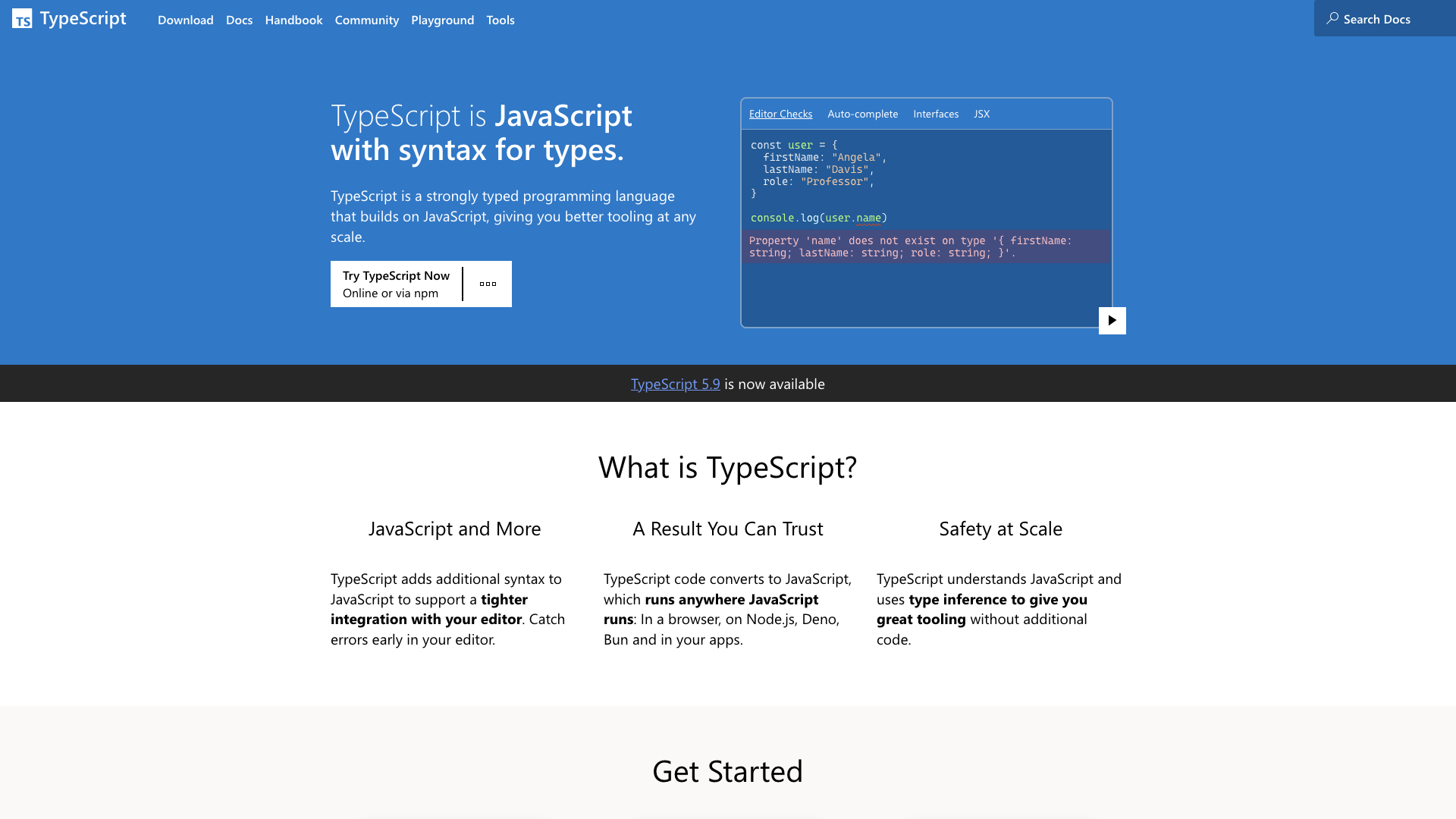
TypeScript 5.6 (September 2024) was dubbed a “blockbuster release”:
Key Features:
- Disallowed Nullish and Truthy Checks for better type safety
- Iterator Helper Methods (
map,take) - Strict Builtin Iterator Return flag
- Computed Properties Override Checking
- Region-Prioritized Diagnostics for large files
TypeScript 5.7 (Beta October 2024): Updated decorators aligned with ECMAScript proposals
TypeScript’s continued evolution reinforced its position as the de facto standard for JavaScript development, with adoption reaching all-time highs.
Python 3.13: JIT Compilation Arrives
Released: October 7, 2024 Latest: Python 3.13.2 (February 2025)
Python 3.13 marked a watershed moment with the introduction of experimental JIT compilation:
Major Features:
- Experimental JIT Compiler (PEP 744): 5-30% speedups for computation-heavy tasks
- Free-Threaded Mode (PEP 703): No-GIL execution for true multi-threading
- Performance: 5-15% improvement over 3.12, 7% reduced memory footprint
- iOS Support (PEP 730): Official iOS build targets
- Enhanced Interactive Interpreter: Color support in tracebacks
The JIT compiler and GIL removal represent the most significant performance improvements in Python’s history, addressing longstanding criticisms of the language.
Rust 2024 Edition: Async Maturity
Rust 1.85.0 (February 2025) stabilized the Rust 2024 Edition:
Highlights:
- Async Closures:
async || {}support for async functional programming - Diagnostic attribute
#[diagnostic::do_not_recommend]for better error messages - Tuple destructuring for collections (up to 12 items)
- Modernized language rules and improved temporary variables
Rust continued its ascent as the language of choice for performance-critical systems, with growing adoption in web development via WebAssembly.
Go 1.24 & 1.25: Simplicity Meets Performance
Go 1.24 (February 2025):
- Fully supported generic type aliases
- Tool directives in go.mod
- Swiss Tables map implementation for faster map operations
- Post-quantum crypto in crypto/tls
- os.Root type for filesystem isolation
Go 1.25 (Expected August 2025):
- WaitGroup.Go method for cleaner goroutine management
- Test attribute methods
Go’s philosophy of simplicity and performance continued to attract developers building cloud-native applications.
Java’s LTS Cadence Shift
Java 25 LTS (Expected September 2025) represents a major shift:
- LTS Cadence: Changed from 3 years to 2 years (Java 21 → Java 25)
- 18 JEPs: Including compact source files, succinct module imports, flexible constructors
- Better Developer Experience: Reduced ceremony in Java code
The faster LTS cycle demonstrates Oracle’s commitment to keeping Java competitive in a rapidly evolving landscape.
AI-Powered Development: Coding Assistants Come of Age
GitHub Copilot: From Assistant to Agent
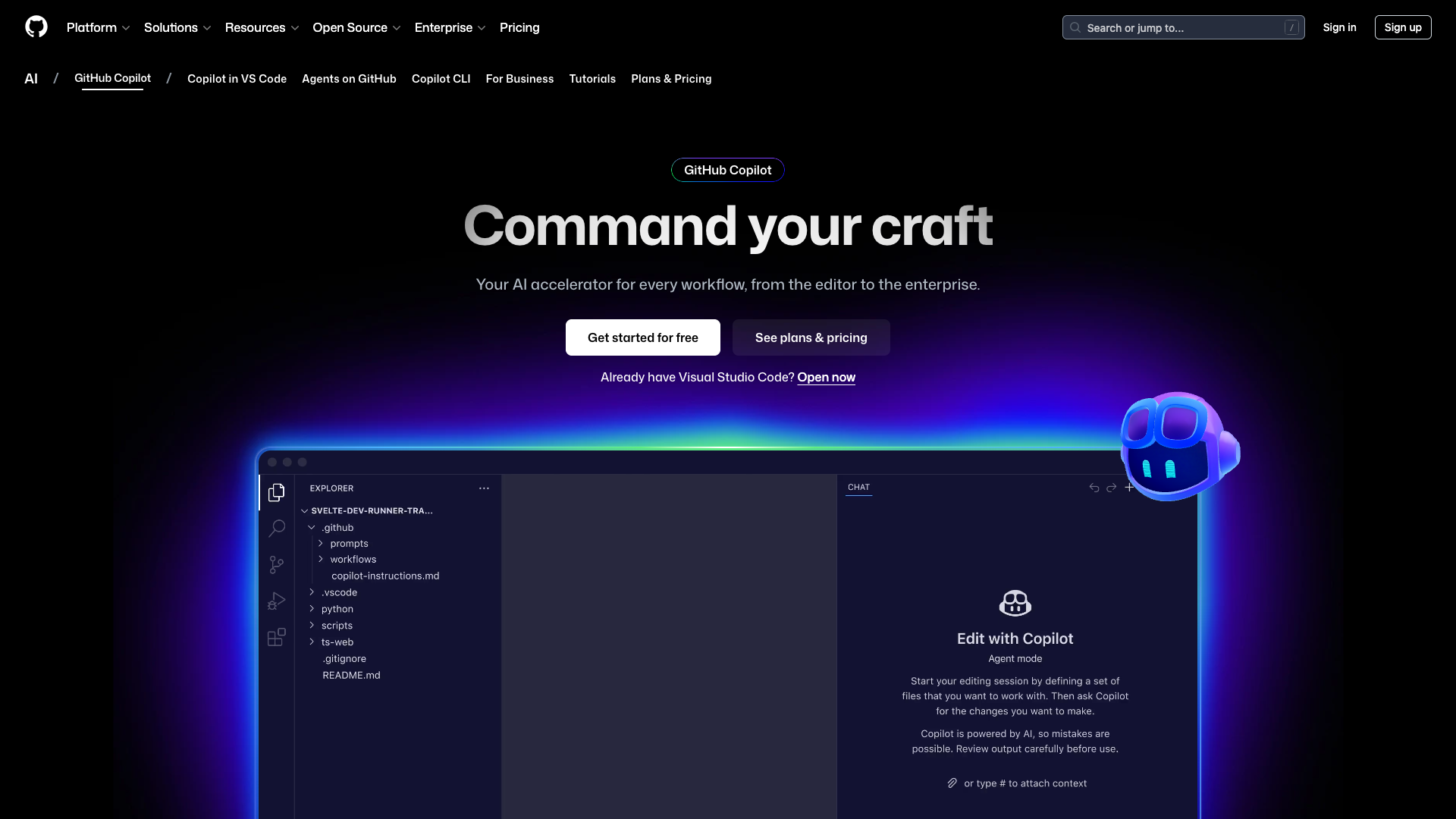
Current Status: 20 million+ users, 3 billion+ code suggestions accepted
GitHub Copilot transformed from a code completion tool to an autonomous coding agent in 2024-2025:
Major Milestones:
Coding Agent (Microsoft Build 2025):
- Asynchronous agent embedded in GitHub and VS Code
- Pushes commits to draft pull requests autonomously
- Available in JetBrains, Eclipse, and Xcode
Agent Mode:
- Multi-file changes with context awareness
- Next edit suggestions based on patterns
- 37.6% better code retrieval
Performance Improvements (September 2025):
- 2x higher throughput
- 8x smaller index
- <400ms response times
Multi-Model Support:
- OpenAI GPT-4o
- Google Gemini 2.0 Flash
- xAI Grok 3
- Anthropic Claude 3.5 Sonnet
Copilot Edits: Generally available for multi-file editing with natural language
Open Source: Copilot Chat extension released under MIT license
GitHub Copilot’s evolution from autocomplete to autonomous agent represents the biggest shift in how code is written since IDEs were introduced.
Cursor 2.0: Agent-First Development
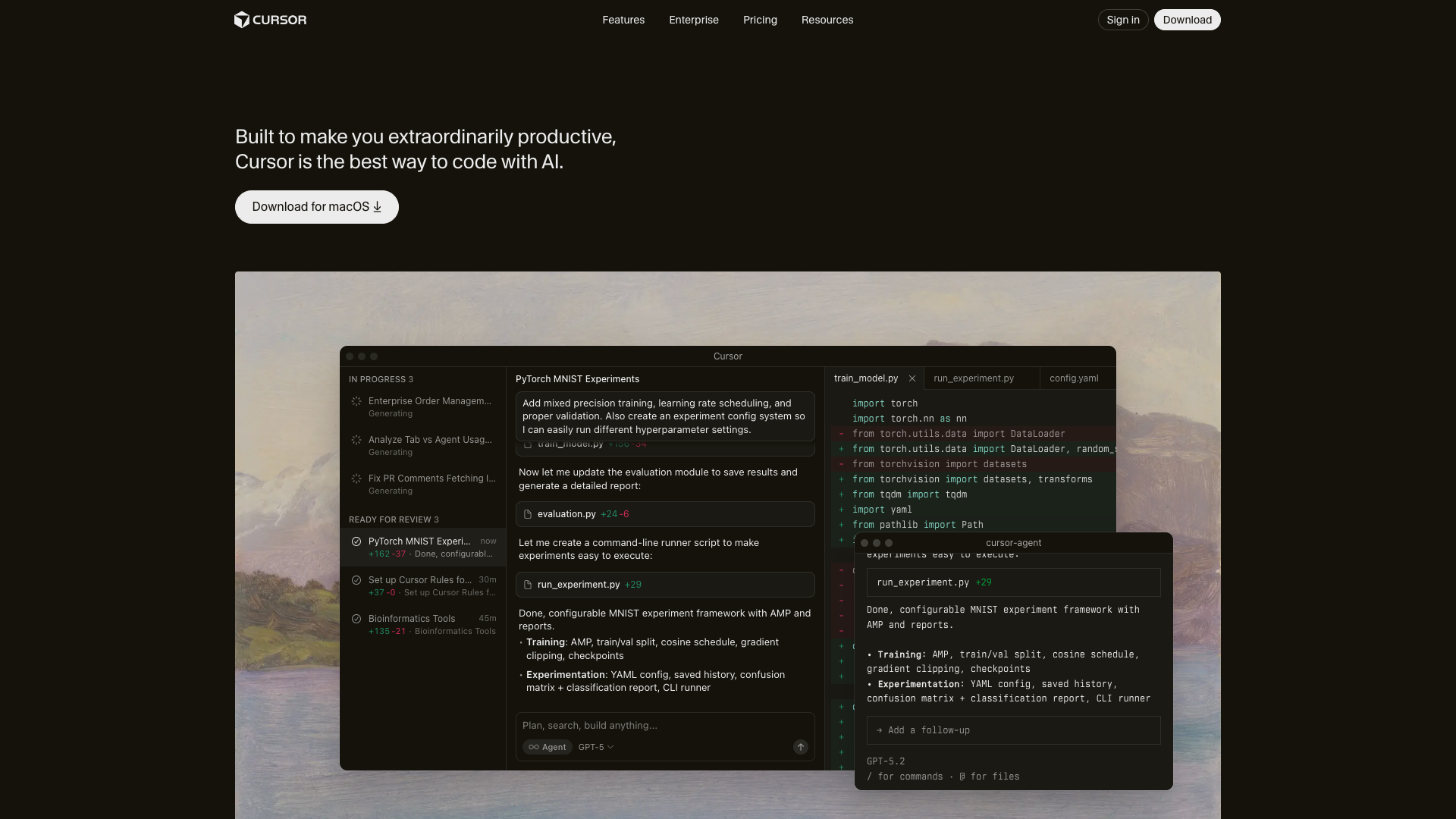
Released: October 2025
Cursor 2.0 introduced a revolutionary agent-centric approach:
Composer Model:
- Frontier model 4x faster than similarly intelligent models
- <30 second conversational turns
- Deep codebase understanding
Agent Features:
- Multi-agent parallel execution via git worktrees
- Browser integration for reading DOM and running E2E tests
- Secure sandbox environment for all shell commands
- Codebase embedding for deep context
Model Flexibility: Supports OpenAI, Anthropic, Gemini, and xAI models
Cursor demonstrated that purpose-built AI coding tools could compete with—and in some cases surpass—general-purpose assistants integrated into traditional IDEs.
Claude Code & Cline: Terminal-First AI
Claude Code (2025):
- Terminal-based coding assistant
- Native extensions for VS Code, Cursor, Windsurf, JetBrains
- 92/100 performance score
- Direct repository understanding without manual context
Cline:
- Open-source autonomous coding agent
- Cline CLI in beta
- Supports OpenAI, Anthropic, Google Gemini
- IDE support for VS Code and JetBrains
The AI Coding Gap
Despite widespread adoption, a gap emerged between AI tool usage and productivity gains:
- Adoption: Near-universal among developers
- Productivity Impact: Only 38% report significant improvements
- Challenge: Learning to effectively prompt and collaborate with AI agents
The most successful developers learned to use AI as a collaborator rather than a replacement, leveraging it for boilerplate code, documentation, and exploration while maintaining control over architecture and critical logic.
Build Tools & Runtimes: The Rust Revolution
Tailwind CSS 4.0: 10x Performance
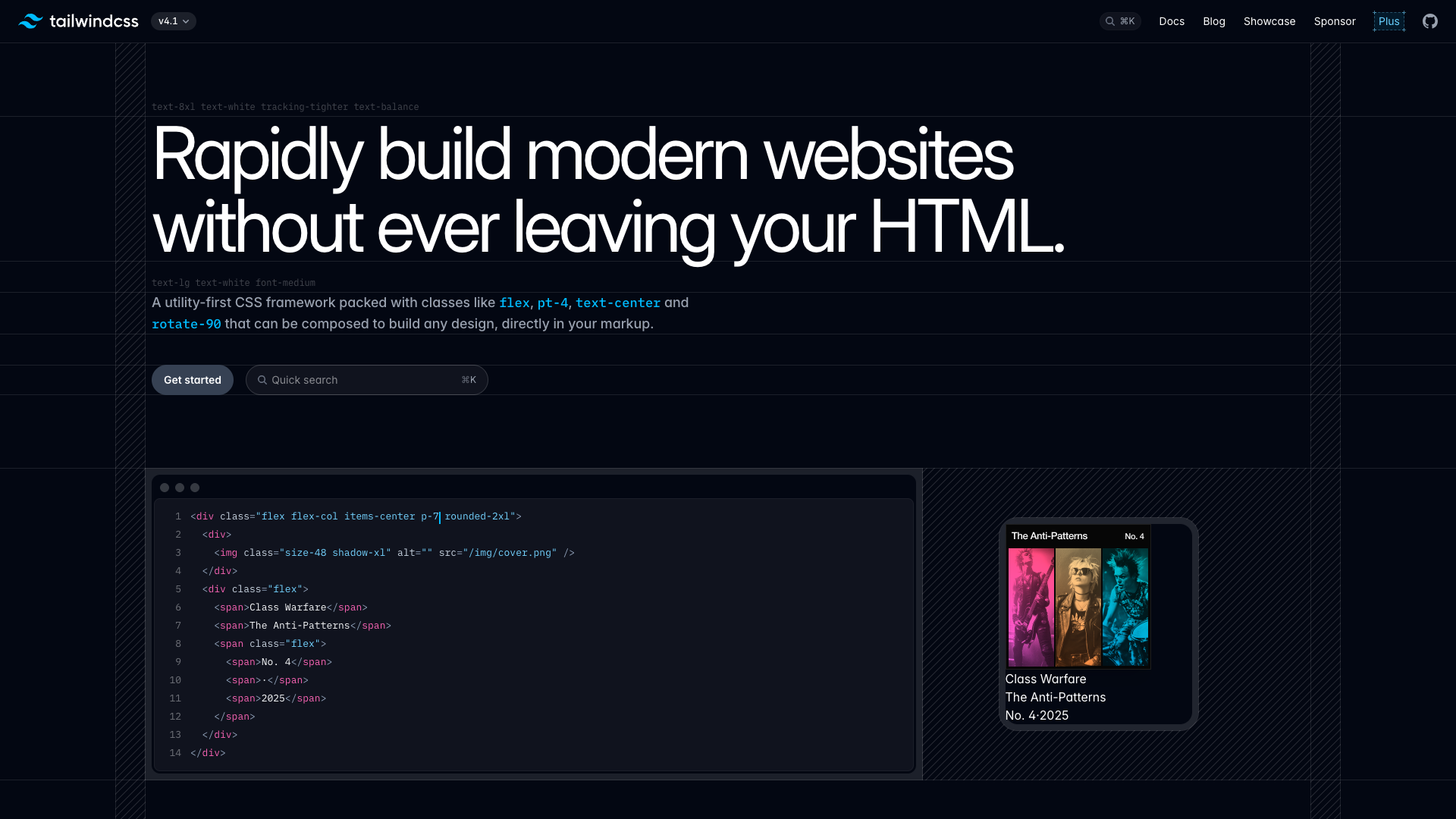
Released: January 2025
Tailwind CSS 4.0 represented a complete ground-up rewrite:
Oxide Engine:
- Rust for performance-critical components
- TypeScript core for extensibility
- 35% smaller installation size
Performance:
- Up to 5x faster builds
- 100x faster incremental builds
- Tailwind CSS website: 105ms vs 960ms (10x improvement)
Modern CSS Features:
- Native
@layerrules @propertydefinitionscolor-mixfor opacity- Container queries in core
- Lightning CSS integrated
Developer Experience:
- CSS-first configuration
- Zero-config content detection
- Vite-optimized
- Wide gamut colors support
Tailwind 4.0 proved that even mature tools could achieve order-of-magnitude improvements through thoughtful rewrites with modern technologies.
Vite vs Turbopack: The Build Tool War
Vite 5:
- Native ES modules + esbuild for dev
- Rollup for production
- Dev server <1 second startup
- Real-world: 21x faster builds, 40x faster dev server, 68x faster HMR vs Webpack
Turbopack:
- Built in Rust, powers Next.js 14+ by default
- 10x faster than Webpack
- 5x faster than Vite in dev mode (according to Vercel benchmarks)
State of JS 2024 Insight: Vite gaining market share at record speed, with Rolldown and Rspack emerging as next-generation contenders.
The build tool landscape demonstrated that performance improvements weren’t just incremental—they could be transformational, fundamentally changing the development experience.
Bun: The JavaScript Runtime Revolution
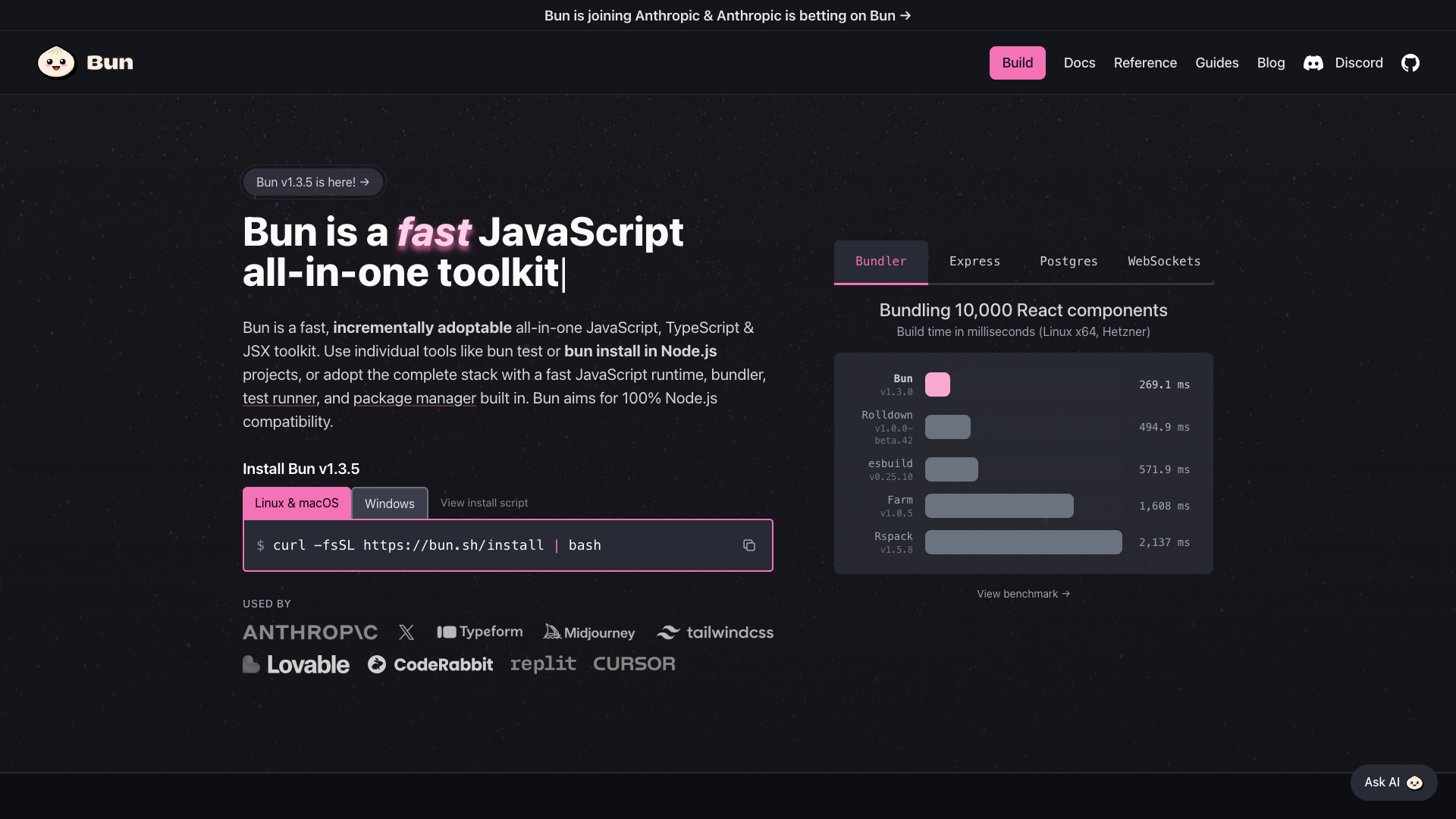
Bun 1.3 (October 2025): Major performance improvements
Specifications:
- Uses JavaScriptCore (not V8)
- Native TypeScript/JSX support
- Bundler, transpiler, and package manager in single binary
- Startup: ~8ms
- HTTP throughput: ~120,000 req/s
State of JavaScript 2024: #2 preference after Node.js, surpassing Deno
Bun’s all-in-one approach and incredible performance made it a serious alternative to Node.js, particularly for new projects prioritizing speed.
Deno 2.5: The Batteries-Included Runtime
Latest: Deno 2.5 with V8 14.0, TypeScript 5.9.2
Features:
- First-class TypeScript support
- Built-in tooling: REPL, test runner, linter, formatter
- Permission system (—allow-net, —allow-read)
- Startup: ~35ms
- HTTP throughput: ~85,000 req/s
Deno positioned itself as the secure, modern alternative with excellent developer experience out of the box.
Node.js: The Steady Hand
Node.js 24 preparing for October LTS:
- Built-in test runner
- WebSocket API
- Permissions model
- Experimental TypeScript support
While Node.js lacked the explosive innovation of Bun or Deno, its maturity and ecosystem dominance kept it as the default choice for most production applications.
DevOps & Infrastructure: Edge and Efficiency
Kubernetes 1.34: AI and Energy
Versions in 2024-2025: 1.30.0, 1.31.0, 1.32.0, 1.33.0, 1.34.0 Latest: 1.34.3
2025 Focus:
- EcoSched: Energy-efficient scheduler for sustainable computing
- AI/ML Workloads: Becoming the go-to platform for AI/ML deployments
- Advanced security features with automated vulnerability scanning
Market Growth: USD 1.8B (2022) → USD 7.8B projected (2030) Adoption: 80% of developers run Kubernetes clusters
Kubernetes solidified its position as the container orchestration standard, with focus shifting to efficiency and specialized workloads.
Docker: Security and Integration
Major Updates 2024-2025:
- Kubernetes integration with visual resource setup
- Enhanced Container Isolation addressing critical CVEs
- Apple Virtualization default VMM (QEMU removed)
- Docker Model Runner command for AI models
Docker continued evolving beyond containers to become a comprehensive development platform.
Edge Computing: The Serverless Evolution
- 3 million active developers (50% YoY growth)
- Cold start: ~2ms
- V8 isolates using 1/10 memory of Node.js
- Builder Day 2024: 18 major updates including static asset hosting
Framework Support:
- Production-ready: React Router v7, Astro, Hono, Vue.js, Nuxt, SvelteKit
- Q2 2025: Next.js, Angular, SolidJS
Vercel Edge Functions:
- Cold start: ~30ms
- Deep Next.js integration
Deno Deploy:
- Cold start: ~20ms
- V8 runtime with Deno APIs
Edge computing transitioned from experimental to production-ready, with major frameworks optimizing for edge deployment.
Database & Backend: Vectors and Edge-First
PostgreSQL 18: Performance Overhaul
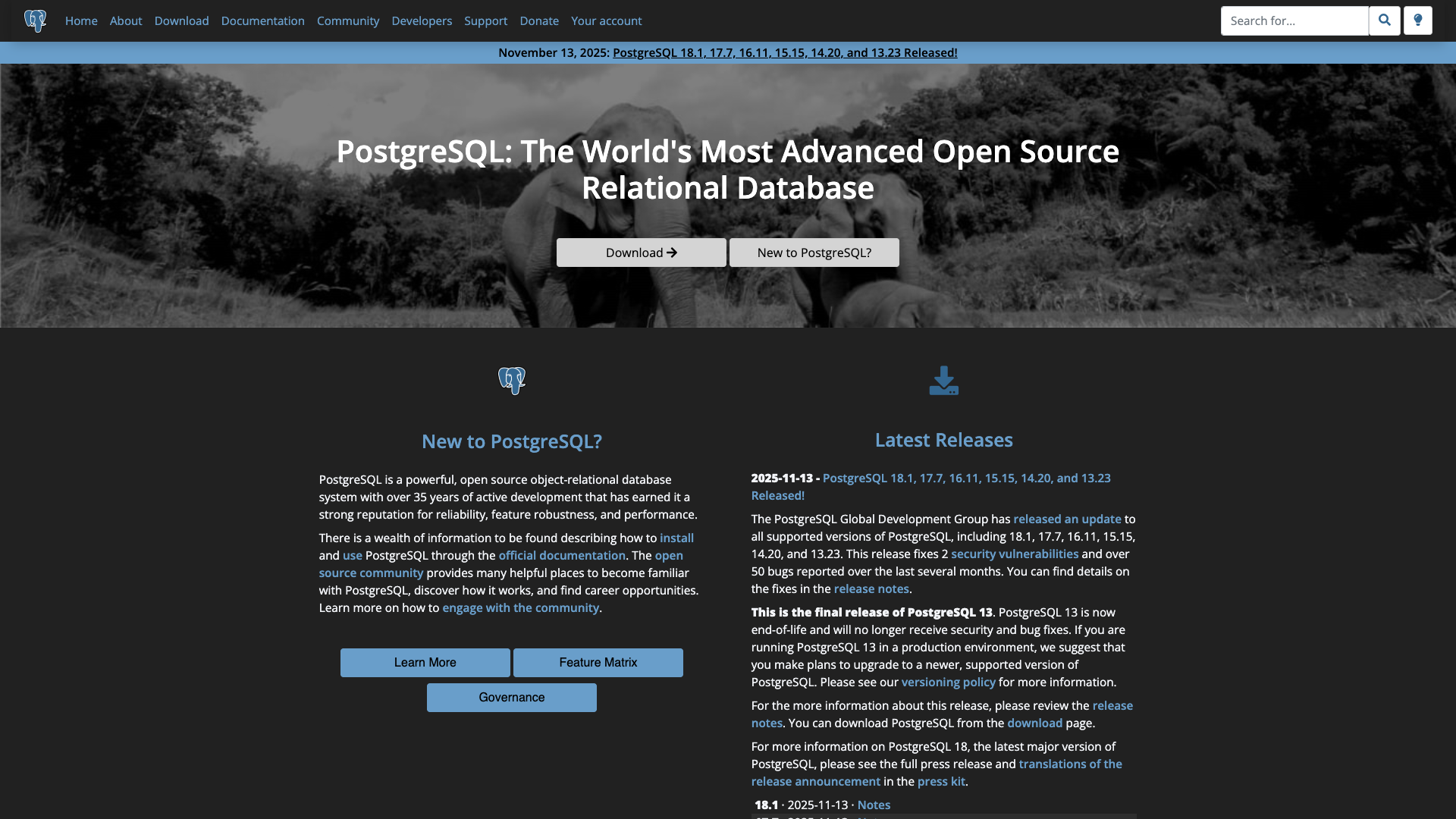
Expected: September/October 2025 Latest Stable: 18.1, 17.7, 16.11 (November 13, 2025)
PostgreSQL 18 Highlights:
- New I/O subsystem: Up to 3x performance improvements
- Faster major-version upgrades
- Virtual generated columns
uuidv7()function for better indexing performance
PostgreSQL continued its reign as the most popular relational database, with each release bringing significant performance improvements.
Vector Databases: From Hype to Commodity
Market Growth:
- “Vector database” searches grew 11x (January 2023 → January 2025)
- Market valued at $2.2B (2024) → $10.6B projected (2032)
Commoditization Trend: Vector search became a checkbox feature in cloud platforms rather than a specialized database requirement.
Leading Solutions:
- Easiest managed option
- CEO change: Ash Ashutosh (September 2025)
- Vendor lock-in concern
- 1 million+ pulls/month
- Hybrid search + open-source path
- Good balance of features and flexibility
pgvector/pgvectorscale:
- 471 QPS at 99% recall on 50M vectors
- Suitable for small-medium datasets (<5M vectors)
- Wins on simplicity if already using Postgres
Hybrid Search Dominance: BM25 + vector similarity consistently outperforms either approach alone, becoming the de facto standard for semantic search applications.
Drizzle vs Prisma: The ORM Evolution
- Mature, feature-rich ecosystem
- Tools: Prisma Client, Migrate, Studio, Accelerate, Pulse
- Challenges: Rust-based query engine binary overhead, edge/serverless struggles
- Rising star for edge/serverless
- ~7.4kb min+gzip, no runtime dependencies
- ESM-first, tree-shakable design
- Philosophy: “If you know SQL, you know Drizzle ORM”
2025 Verdict:
- Drizzle: Edge/serverless, performance-critical, minimal builds
- Prisma: Conventional apps with heavy abstraction needs
The ORM landscape reflected the broader trend toward edge-first development and minimal JavaScript.
Developer Tools: VS Code’s AI Integration
VS Code Milestones 2024-2025:
December 2024: Free GitHub Copilot
- 2000 completions/month
- 50 chat requests/month
- GPT-4o + Claude 3.5 Sonnet
January 2025: Copilot as core feature (v1.97)
February 2025: Copilot Agent Mode
- Creates apps from scratch
- Multi-file refactoring
- Writes and runs tests
Late 2024: Copilot Edits for multi-file editing
May 2025 (v1.101):
- GitHub Copilot works independently in background
- Pull Requests extension for agent task tracking
October 2025: OpenAI Codex integration in VS Code Insiders with Copilot Pro+
VS Code’s transformation into an AI-first editor demonstrated Microsoft’s commitment to keeping the most popular editor at the forefront of development tools.
Industry Trends: Platform Engineering and Security
Platform Engineering: The DevEx Revolution
Key Statistics:
- 80% of large organizations expected to have platform engineering teams by 2026
- 69% of developers lose 8+ hours/week to inefficiencies
- High DevEx organizations 31% more likely to improve delivery flow
- Engaged developers 30% more productive
Focus Areas:
- Internal Developer Platforms (IDPs) reducing time-to-market
- Developer experience prioritized over raw feature velocity
- Self-service capabilities reducing toil
Platform engineering emerged as the antidote to DevOps complexity, focusing on developer productivity rather than just operational excellence.
DevSecOps and Zero Trust
NIST DevSecOps Framework (2025):
- NIST SP 1800-44A: Comprehensive DevSecOps practices
- Foundation using Zero Trust Architecture (ZTA) principles
- Security embedded across full SDLC
Zero Trust in CI/CD:
- Verify everything, assume breach
- Least privilege access
- Secure code and dependencies
- Continuous monitoring
Software Supply Chain Security:
- Critical concern after high-profile attacks
- Attestations and SBOMs (Software Bill of Materials) in greater use
- Larger organizations and regulated industries leading adoption
Security shifted left in the development process, with security considerations embedded from the first line of code rather than as a pre-deployment checklist.
Remote Development: Cloud-First Workflows
GitHub Codespaces Evolution:
- 2024: Copilot integration, AI-assisted environment config
- 2025: Workspace cloning, multi-repo orchestration, AI-powered dev onboarding
- Mission: Make cloud development default
- Free tier: 120 hours
Competitive Landscape:
- GitHub Codespaces: Seamless GitHub integration
- DevPod: Open-source client-only, DevContainer standards
- Gitpod: Automated ephemeral workspaces, prebuilds
Dev Containers: Docker containers configured as full development environments became central to modern remote workflows, ensuring consistency across development, CI, and production.
Conclusion: A Year of Transformation
2024-2025 will be remembered as the year software development fundamentally transformed. The convergence of several major trends created a perfect storm of innovation:
Performance Revolution: Rust-powered tooling delivered 5-100x speedups across build tools, frameworks, and runtimes, eliminating previous bottlenecks.
AI Integration: AI evolved from code completion to autonomous agents capable of building features end-to-end, fundamentally changing the developer workflow.
Framework Maturity: Major frameworks reached new levels of optimization through sophisticated compilers and runtime innovations, delivering dramatic performance improvements while improving developer experience.
Edge-First Architecture: Serverless and edge computing moved from niche to mainstream, with major frameworks optimizing for edge deployment by default.
Developer Experience Focus: The industry recognized that developer productivity stems from great tooling, clear documentation, and frictionless workflows—not just faster computers.
Security by Default: DevSecOps and Zero Trust shifted security left, embedding it throughout the development process rather than treating it as a final gate.
Looking ahead, these trends will continue to accelerate. AI assistants will become more sophisticated, build tools will get faster, and the line between local and cloud development will blur further. Edge computing will become the default deployment target, and security will be inseparable from development.
For developers, the imperative is clear: embrace these tools and workflows now. The productivity gains from modern frameworks, AI assistants, and optimized build tools are too significant to ignore. Those who adapt will find themselves dramatically more productive, while those who resist risk being left behind.
The software development landscape of 2024-2025 proved that innovation isn’t slowing down—it’s accelerating. And the best part? This is just the beginning.
What trends from 2024-2025 had the biggest impact on your development workflow? Share your experiences and join the conversation about the future of software development.