How to Choose an AI Agency in 2026: Complete Guide to Finding the Right Partner
As we move into 2026, artificial intelligence has transitioned from an emerging technology to a business imperative. Whether you’re looking to implement AI-powered automation, develop custom machine learning models, or integrate generative AI into your products, choosing the right AI agency partner is crucial for success.
But with hundreds of agencies claiming AI expertise, how do you separate true AI innovators from those simply adding “AI” to their service list? This comprehensive guide will walk you through everything you need to know to make an informed decision.
Why Choosing the Right AI Agency Matters
The AI landscape in 2026 is more complex than ever. With rapid advancements in:
- Large Language Models (LLMs) and generative AI
- Computer vision and multimodal AI
- AI agents and autonomous systems
- Edge AI and real-time inference
- Responsible AI and governance frameworks
You need a partner who not only understands the technology but can navigate the strategic, ethical, and implementation challenges that come with AI adoption.
A poor agency choice can result in:
- Wasted budget on proof-of-concepts that never scale
- Technical debt from poorly architected solutions
- Compliance and security vulnerabilities
- Missed market opportunities due to slow delivery
The right partner, however, can accelerate your AI journey, provide strategic guidance, and deliver solutions that drive real business value.
Key Factors to Consider When Evaluating AI Agencies
1. Technical Expertise and AI Specializations
Not all AI agencies are created equal. Some specialize in specific areas:
- AI Strategy & Consulting: Agencies that help define your AI roadmap
- Custom AI/ML Development: Building bespoke models and algorithms
- Generative AI Integration: LLM fine-tuning, RAG systems, AI agents
- Computer Vision: Image recognition, video analysis, autonomous systems
- NLP & Conversational AI: Chatbots, sentiment analysis, language processing
- AI-Powered Automation: Workflow optimization, intelligent process automation
What to look for:
- Technical case studies in your industry
- Open-source contributions or research publications
- Certifications from major AI platforms (Google Cloud AI, AWS ML, Azure AI)
- In-house AI research teams or data science expertise
2. Industry Experience and Domain Knowledge
AI implementation varies dramatically across industries. Healthcare AI faces different challenges than retail AI or financial services AI.
Key questions:
- Do they have proven experience in your industry?
- Do they understand regulatory requirements (HIPAA, GDPR, financial regulations)?
- Can they provide relevant case studies and references?
- Do they have industry-specific AI accelerators or frameworks?
3. Development Approach and Methodology
The best AI agencies follow a structured approach:
- Discovery & Strategy: Understanding business objectives
- Proof of Concept: Validating technical feasibility
- MVP Development: Building minimum viable AI solutions
- Scaling & Optimization: Production deployment and improvement
- Maintenance & Evolution: Ongoing model monitoring and updates
4. Team Composition and Talent Quality
AI development requires diverse expertise:
- Machine Learning Engineers
- Data Scientists
- MLOps Engineers
- AI Product Managers
- Domain Experts
- Ethics & Compliance Specialists
Red flags:
- Generic “full-stack developers” claiming AI expertise
- No dedicated data science team
- Lack of MLOps or deployment experience
- No mention of model monitoring or governance
5. Technology Stack and Platform Expertise
Leading agencies typically work with:
- ML Frameworks: TensorFlow, PyTorch, JAX
- LLM Platforms: OpenAI, Anthropic, Cohere, Google Gemini
- Cloud Platforms: AWS SageMaker, Google Vertex AI, Azure ML
- MLOps Tools: MLflow, Kubeflow, Weights & Biases
- Vector Databases: Pinecone, Weaviate, Qdrant
6. Security, Privacy, and Compliance
AI introduces unique security and privacy challenges:
- Data Privacy: How is training data handled?
- Model Security: Protection against adversarial attacks
- Compliance: SOC 2, ISO 27001, industry-specific certifications
- Responsible AI: Bias detection, explainability, fairness
7. Pricing Models and Cost Transparency
AI agency pricing typically falls into:
- Fixed Price: Best for well-defined projects
- Time & Materials: Flexible for evolving requirements
- Dedicated Team: Long-term partnerships
- Success-Based: Payment tied to outcomes
Expect to invest:
- $50,000 - $150,000 for AI proof-of-concepts
- $200,000 - $500,000 for MVP AI solutions
- $500,000+ for enterprise-scale AI implementations
Top 6 AI Agencies Recommended for 2026
Based on technical expertise, client success, and innovation, here are six agencies leading the AI development space in 2026:
1. Innowise
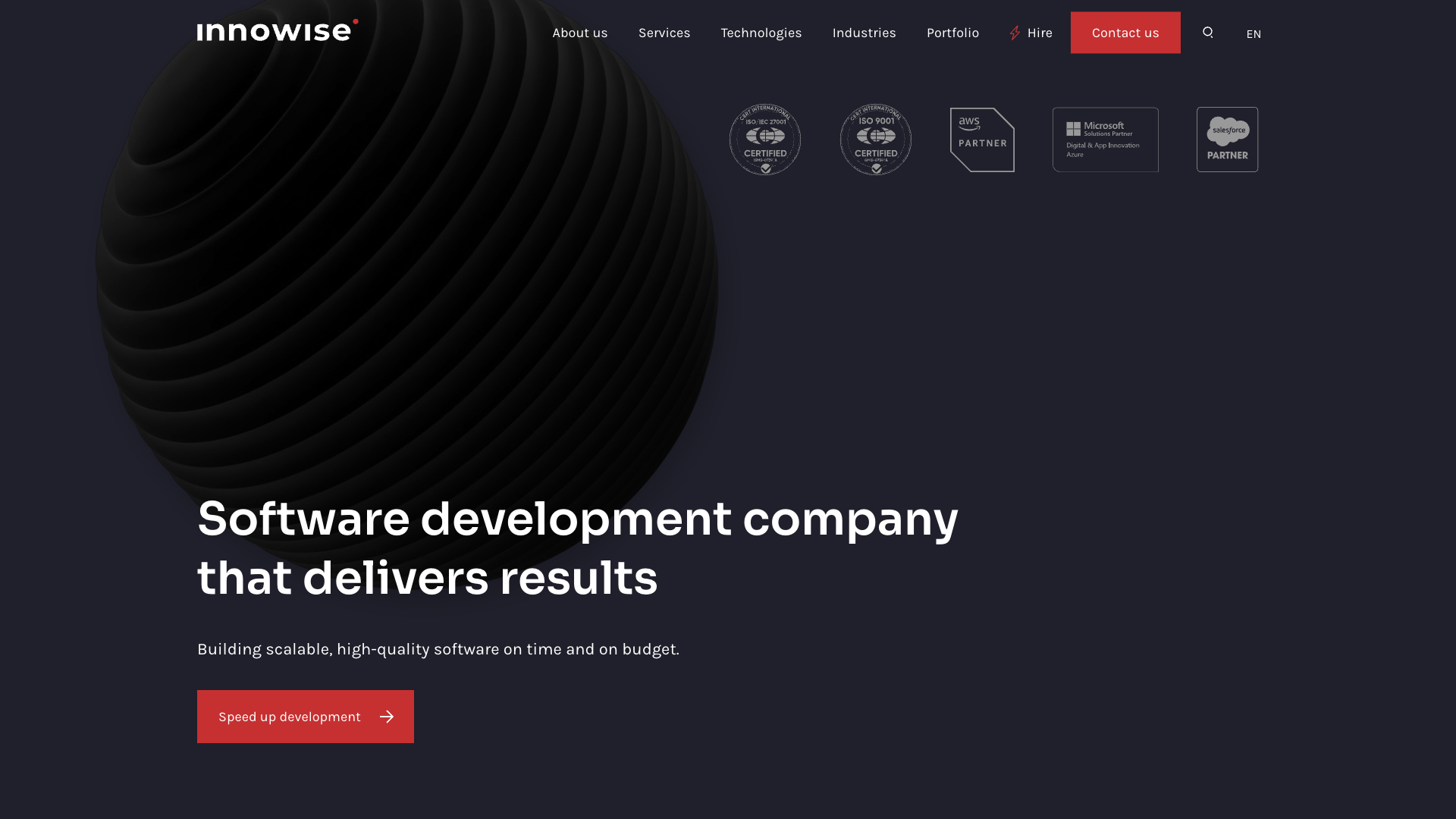
Specialization: Enterprise AI Solutions, Custom ML Development, AI Strategy
Innowise is a leading software development company with deep expertise in AI and machine learning. With 1,800+ professionals across global delivery centers, they combine technical excellence with industry knowledge.
Key Strengths:
- Comprehensive AI services from strategy to implementation
- Strong focus on enterprise-grade solutions
- Expertise in computer vision, NLP, and predictive analytics
- Proven track record with Fortune 500 companies
- ISO 9001, ISO 27001 certified
Best For: Large enterprises seeking end-to-end AI transformation with robust governance and scalability.
Notable Capabilities:
- Custom ML model development
- AI-powered business intelligence
- Intelligent automation solutions
- Legacy system AI integration
2. Turing

Specialization: AI Talent Platform, Remote AI Engineering Teams
Turing revolutionizes how companies access AI talent. They use AI to vet and match top engineers, then provide fully managed remote teams specialized in AI development.
Key Strengths:
- Access to vetted AI engineers from 150+ countries
- Rapid team scaling (hire in 3-5 days)
- AI-powered talent matching ensures skill alignment
- Flexible engagement models
- Strong expertise in LLMs, computer vision, and ML engineering
Best For: Companies needing to quickly scale AI engineering capacity without long hiring processes.
Notable Capabilities:
- Generative AI development teams
- ML infrastructure and MLOps specialists
- Full-stack AI engineers
- AI research scientists on-demand
3. Aloa
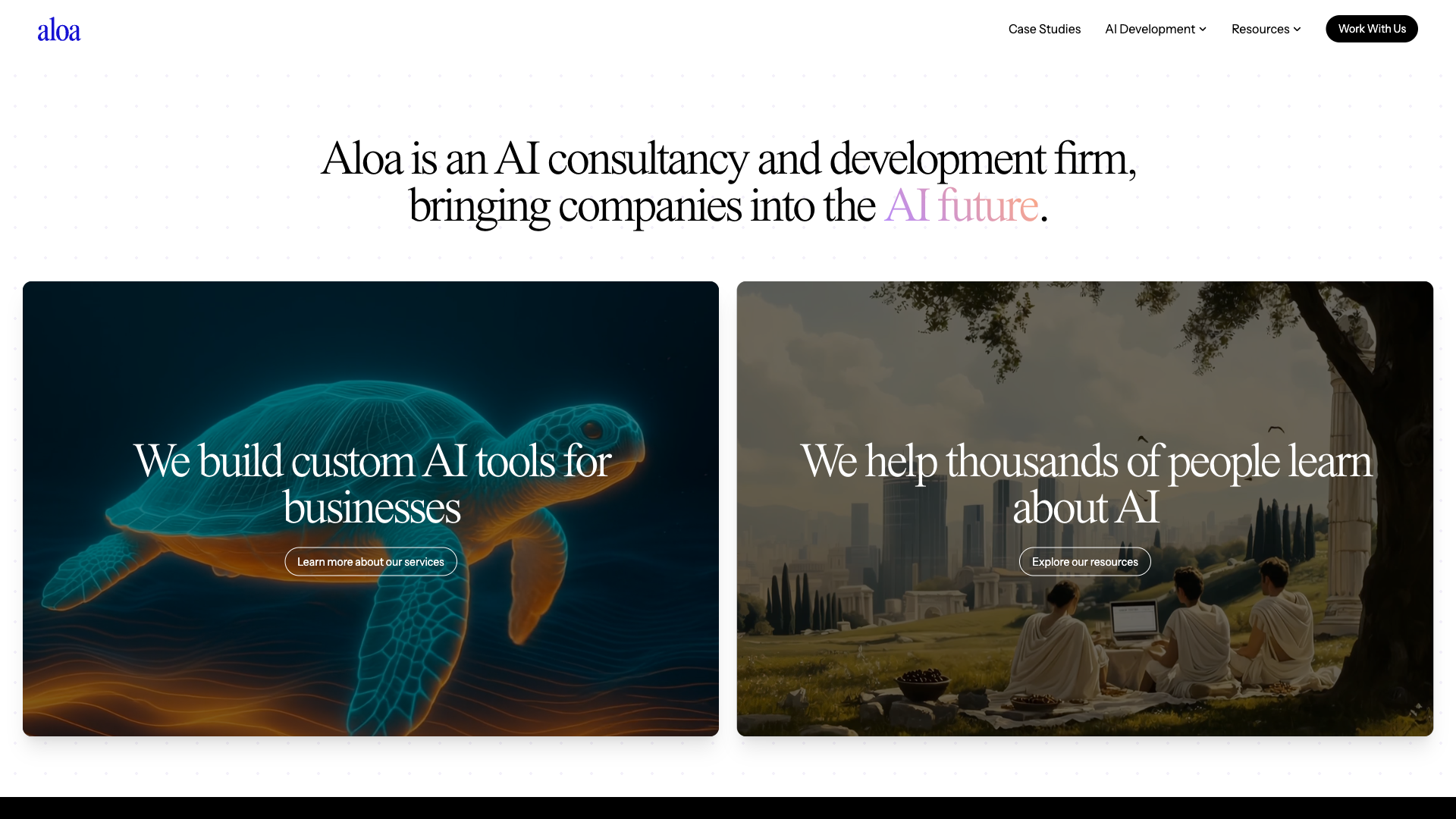
Specialization: Custom AI Development, Agentic AI, Industry-Specific Solutions
Aloa is an AI consultancy known for their consultative approach and educational leadership. With 250+ clients served, they emphasize discovery, validation, and practical implementation.
Key Strengths:
- Industry-specific AI solutions (healthcare, finance, real estate)
- Agentic AI and autonomous systems expertise
- Strong educational content and thought leadership
- Proof-of-concept validation before scaling
- HIPAA-compliant healthcare AI solutions
Best For: Mid-market companies seeking strategic AI consultation combined with hands-on development.
Notable Capabilities:
- Agentic AI systems
- Computer vision applications
- LLM fine-tuning and RAG systems
- AI workflow automation
- AI Academy for client education
4. Code Brew Labs
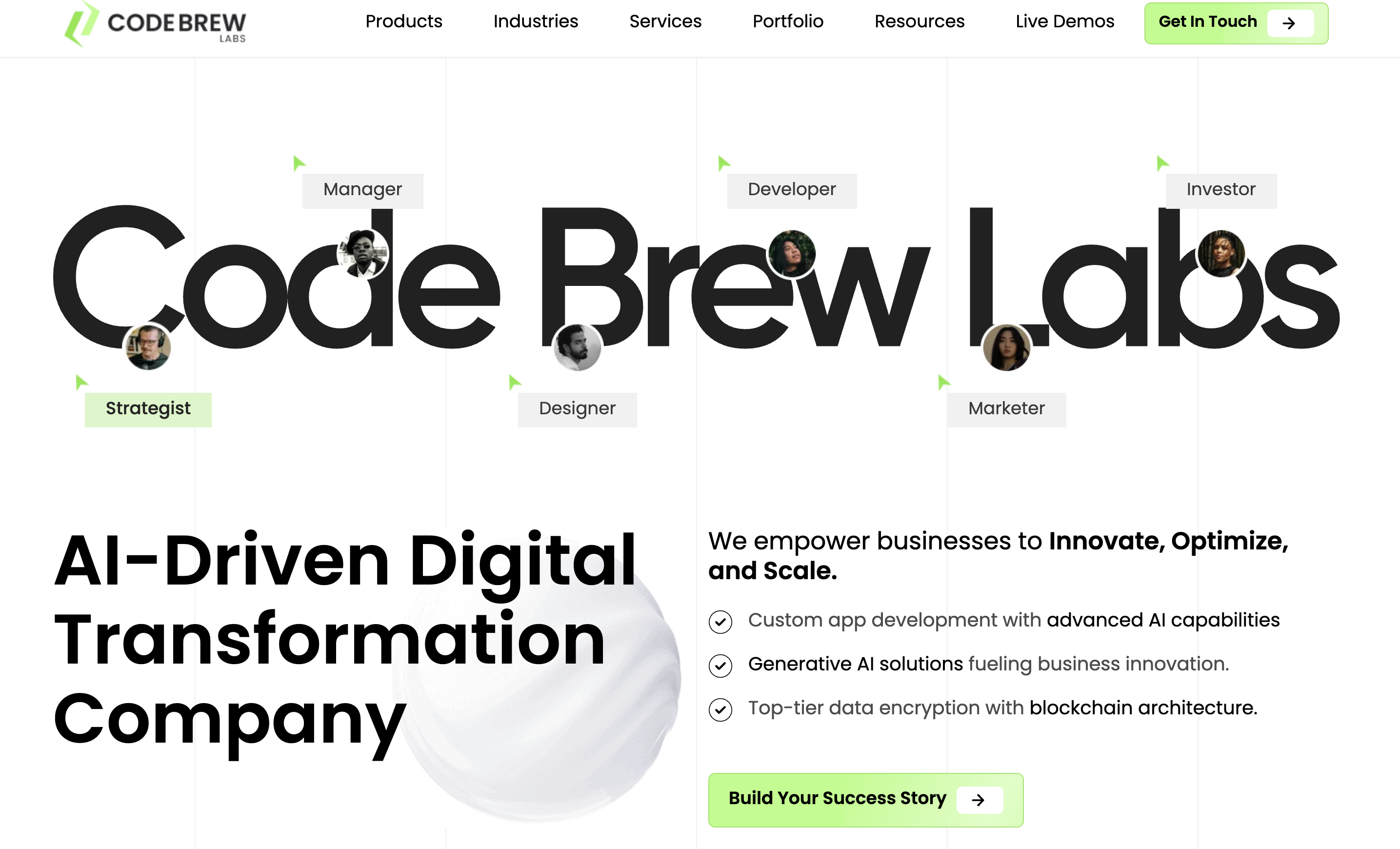
Specialization: AI Mobile Apps, Blockchain AI Integration, Cross-Platform AI Solutions
Code Brew Labs positions itself as a specialized AI mobile and software development agency, bringing AI capabilities to mobile-first experiences.
Key Strengths:
- AI-powered mobile application development
- Integration of AI with blockchain technologies
- Focus on consumer-facing AI applications
- Cross-platform AI solution expertise
Best For: Startups and mid-sized companies building AI-powered mobile apps or consumer products.
Notable Capabilities:
- AI mobile app development
- Machine learning model integration
- Custom AI software solutions
- Blockchain + AI hybrid solutions
5. Relevant Software
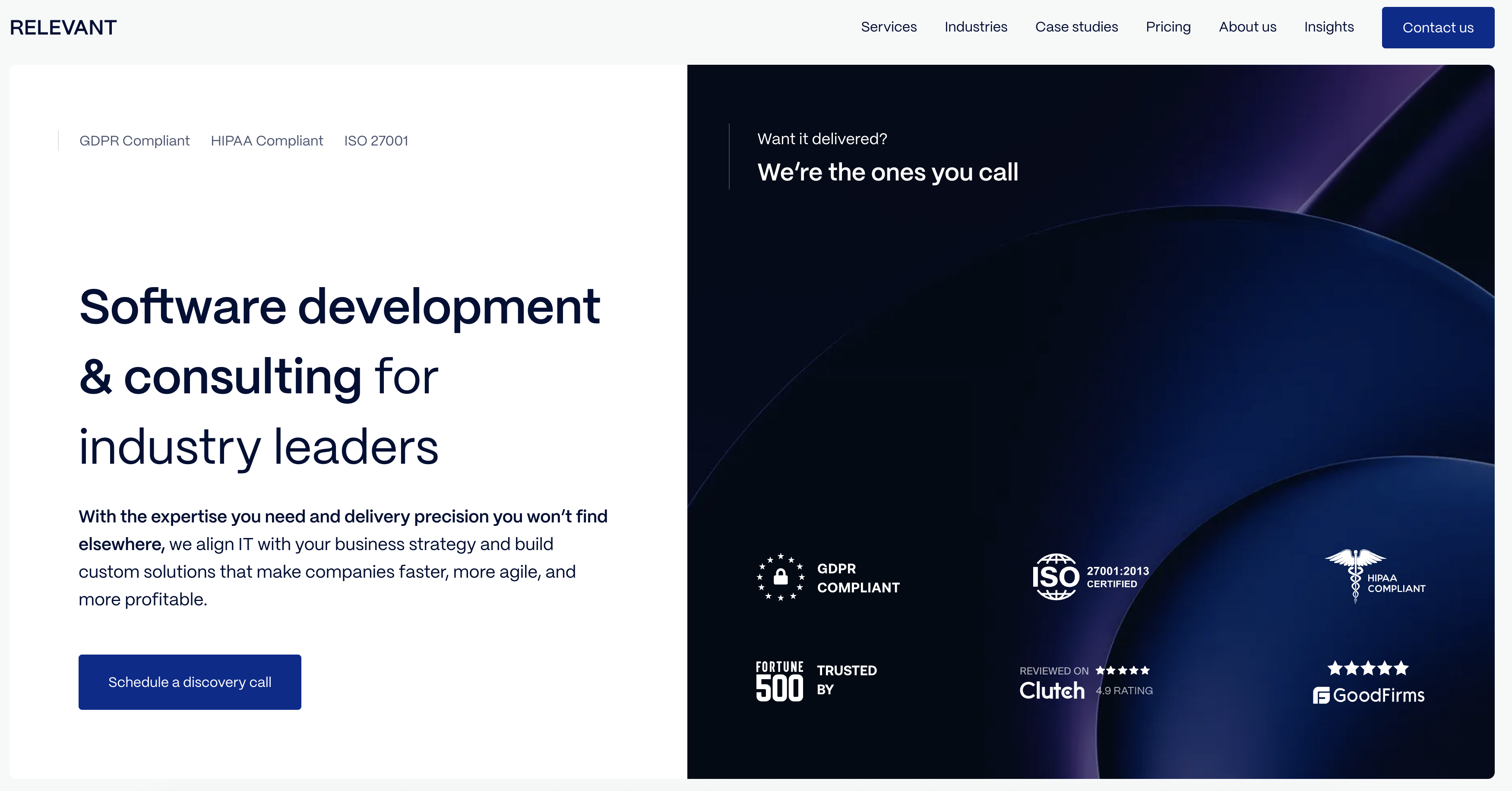
Specialization: Custom AI/ML Development, Data Science, Technical Excellence
Relevant Software is a Ukrainian software development company known for technical expertise, competitive pricing, and deep AI/ML capabilities.
Key Strengths:
- Strong data science and ML engineering team
- Cost-effective without compromising quality
- Focus on custom AI solutions
- Experience with complex ML projects
- Agile development methodology
Best For: Companies seeking high-quality AI development with competitive pricing.
Notable Capabilities:
- Custom machine learning models
- Data engineering and pipeline development
- AI-powered analytics platforms
- Computer vision solutions
- NLP and text analysis systems
6. Scale AI
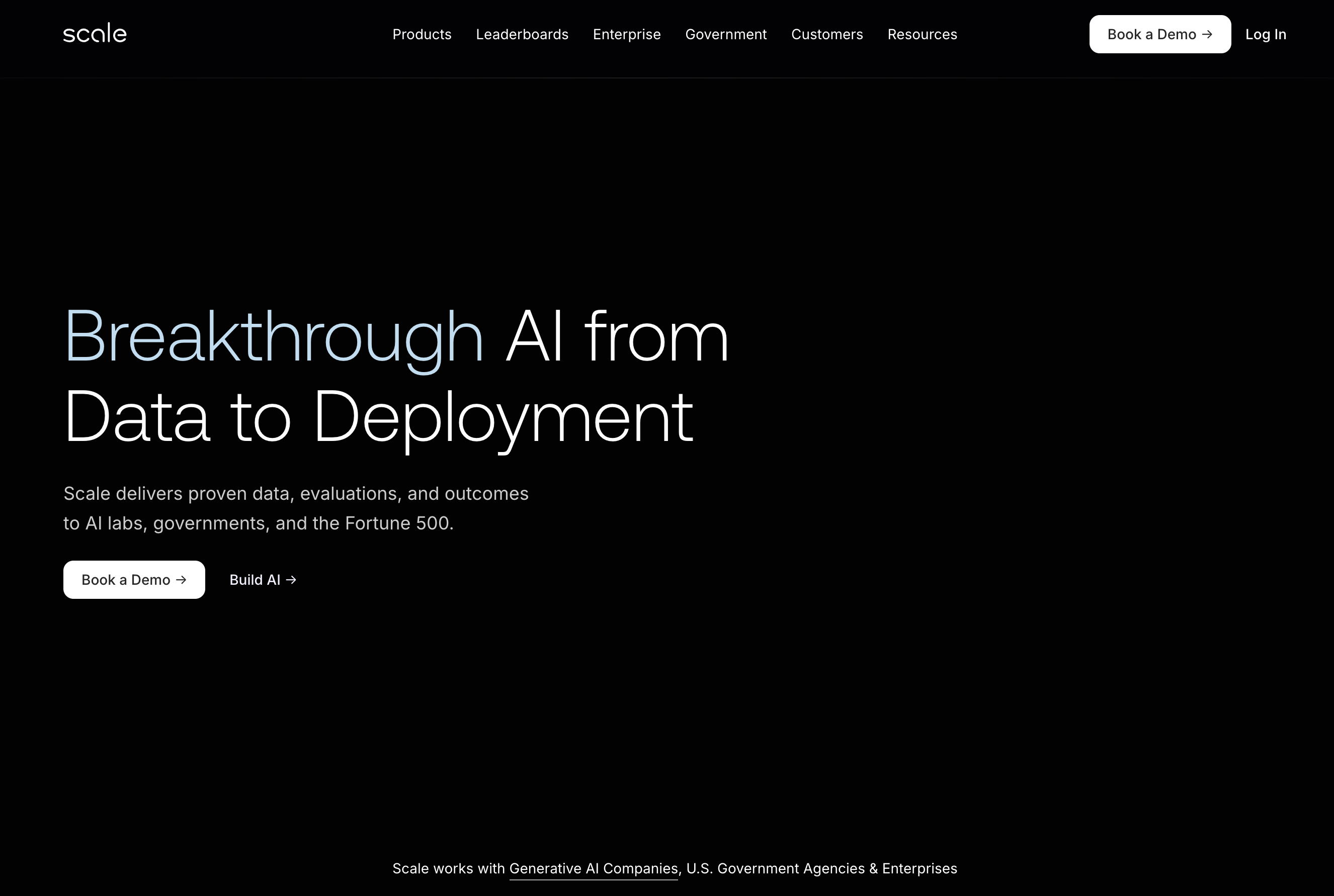
Specialization: AI Data Platform, Foundation Model Training, Enterprise AI Infrastructure
Scale AI is the leading data platform powering the world’s most advanced AI systems. They provide the data, infrastructure, and tools needed to build and deploy production AI.
Key Strengths:
- Powers foundation models for Meta, Cohere, Character AI
- Comprehensive GenAI platform and data engine
- RLHF and model fine-tuning expertise
- FedRAMP, ISO, SOC 2 certified
- Serves U.S. government and defense agencies
Best For: Enterprises and AI companies building foundation models or requiring enterprise-scale AI infrastructure.
Notable Capabilities:
- Data annotation and labeling at scale
- RLHF and model alignment
- GenAI platform with full-stack tools
- Agentic workflow orchestration
- Model evaluation and safety assessment
- Government-grade security and compliance
Notable Clients: Meta, U.S. Army, Air Force, Cisco, Mayo Clinic, TIME Magazine
How to Evaluate and Compare These Agencies
Step 1: Define Your AI Requirements
Before reaching out, clearly articulate:
- Business Objectives: What problem are you solving?
- Technical Requirements: What type of AI solution do you need?
- Timeline: When do you need results?
- Budget: What can you invest?
- Success Metrics: How will you measure ROI?
Step 2: Initial Screening
Create a shortlist based on:
- Industry experience
- Technical specialization match
- Project portfolio relevance
- Budget alignment
- Team availability
Step 3: Discovery Calls
During initial conversations, assess:
- How well they understand your business
- Quality of questions they ask
- Strategic thinking vs. just execution
- Communication clarity
- Cultural fit
Step 4: Request Detailed Proposals
A strong AI proposal should include:
- Problem analysis and approach
- Technical architecture overview
- Proposed methodology
- Team composition and expertise
- Timeline with milestones
- Detailed pricing breakdown
- Success metrics and KPIs
- Risk mitigation strategies
Step 5: Check References
Ask for:
- 2-3 similar project references
- Permission to speak with past clients
- Case studies with measurable outcomes
Questions for references:
- Was the project delivered on time and budget?
- How did they handle challenges?
- Quality of communication?
- Post-launch support?
- Would you work with them again?
Critical Questions to Ask Potential AI Agencies
Technical Capability Questions
- “What’s your experience with [specific AI technology] in [your industry]?”
- “How do you approach model explainability and bias detection?”
- “What’s your MLOps and deployment process?”
- “How do you handle model monitoring and drift detection?”
- “Can you walk me through a recent AI project from concept to production?”
Process and Methodology Questions
- “How do you validate AI use cases before full development?”
- “What’s your approach to data privacy and security?”
- “How do you handle changes in project scope?”
- “What does your typical AI project timeline look like?”
- “How do you ensure knowledge transfer to our internal team?”
Team and Resources Questions
- “Who will be on our project team and what are their qualifications?”
- “Do you have in-house data scientists and ML engineers?”
- “What’s your team’s experience with our technology stack?”
- “How do you handle team continuity and knowledge retention?”
Business and Support Questions
- “What does your post-launch support include?”
- “How do you price AI projects - fixed or time & materials?”
- “What happens if the initial approach doesn’t work?”
- “Do you offer ongoing model retraining and optimization?”
- “What’s your approach to IP and code ownership?”
- “Can you provide references from similar projects?”
Red Flags to Watch For
Technical Red Flags
- ❌ Over-promising results without discovery
- ❌ No discussion of data quality or requirements
- ❌ Lack of MLOps or deployment expertise
- ❌ No mention of model monitoring or maintenance
- ❌ Cookie-cutter solutions without customization
- ❌ Inability to explain technical approaches clearly
Process Red Flags
- ❌ No proof-of-concept or validation phase
- ❌ Unwilling to provide references
- ❌ Vague or unclear pricing
- ❌ No discussion of risks or challenges
- ❌ Pressure to sign quickly without proper evaluation
Team Red Flags
- ❌ Junior team presented vs. senior team sold
- ❌ No dedicated AI specialists
- ❌ High team turnover
- ❌ Offshore teams without proper oversight
- ❌ No clear project ownership or accountability
Making Your Final Decision
After evaluating proposals, use a structured approach to compare agencies:
Key evaluation criteria:
- Technical expertise alignment with your AI needs
- Industry experience and relevant case studies
- Team quality and dedicated AI specialists
- Methodology and development approach
- Value for money (not just lowest price)
- Communication quality and cultural fit
Don’t just choose based on price—the cheapest option often costs more in the long run through delays, rework, and missed opportunities. Focus on finding the best strategic partner who understands your business goals and can deliver long-term value.
Getting Started: First Steps with Your Chosen Agency
Once you’ve selected an agency:
Week 1-2: Kickoff and Discovery
- Align on goals and success metrics
- Share relevant data and documentation
- Establish communication protocols
- Set up project management tools
Week 3-4: Technical Discovery
- Data assessment and quality review
- Architecture design sessions
- Risk identification
- Refined timeline and milestones
Week 5-8: Proof of Concept
- Build minimal viable model
- Validate technical approach
- Assess feasibility and ROI
- Decide on full development
Month 3+: Full Development
- Iterative development cycles
- Regular demos and feedback
- Continuous testing and validation
- Documentation and knowledge transfer
Conclusion: Finding Your Ideal AI Partner for 2026
Choosing an AI agency is one of the most important decisions you’ll make for your digital transformation. The right partner will not only deliver technical solutions but become a strategic advisor in your AI journey.
Key considerations for your decision:
✅ Technical expertise aligned with your AI needs - Whether it’s generative AI, computer vision, or ML infrastructure, ensure deep specialization ✅ Industry experience in your sector - Domain knowledge makes the difference between generic and transformative AI solutions ✅ Proven methodology and delivery track record - Look for structured approaches from discovery to production deployment ✅ Team quality and dedicated AI specialists - Data scientists, ML engineers, and MLOps experts, not just general developers ✅ Transparent pricing and clear value proposition - Understand total cost of ownership including post-launch support ✅ Cultural fit and communication excellence - AI projects require close collaboration and clear stakeholder communication
Whether you choose an established enterprise partner like Innowise or Scale AI, an innovative consultancy with specialized focus, or a flexible talent platform like Turing—the key is finding alignment between their capabilities and your specific business needs.
Take your time with the evaluation process. Ask tough questions. Check references thoroughly. And remember: in AI development, the cheapest option rarely delivers the best long-term value.
Next Steps
Ready to find your ideal AI agency partner? Here’s your action plan:
- Define your AI requirements using the evaluation framework in this guide (2-3 hours)
- Shortlist 3-5 agencies based on technical specialization and industry experience (1-2 days)
- Request detailed proposals with technical approach, team composition, and timeline (1 week)
- Schedule discovery calls to assess strategic thinking and cultural fit (1-2 weeks)
- Check references from similar AI projects in your industry (3-5 days)
- Start with a proof-of-concept to validate approach before full commitment (4-8 weeks)
Contact ClearPick for personalized AI agency matching based on your specific needs - completely free for you.
Last updated: December 23, 2025 | Read time: 12 minutes