
The United States is home to the world’s most influential design agencies—studios that have shaped iconic brands, pioneered design methodologies, and created experiences used by billions. From New York’s branding powerhouses to San Francisco’s digital design innovators, American design agencies set global standards for creativity and strategic thinking.
Whether you’re launching a startup, rebranding an enterprise, or designing the next breakthrough product, partnering with a US-based design agency offers distinct advantages: access to world-class talent, cultural alignment with American consumers, and the collaborative benefits of working in aligned time zones.
We evaluated over 40 US-based design agencies to bring you this definitive top 10 list. We assessed portfolio quality, client rosters, industry recognition, design awards, and transformational impact to identify America’s premier design partners.
What Makes a Great US-Based Design Agency?
Portfolio Excellence and Proven Impact
The best design agencies don’t just make things look beautiful—they drive measurable business results. Look for agencies with portfolios showcasing transformational work: rebrands that revitalized companies, products that became market leaders, and digital experiences that set new industry standards. Case studies should demonstrate clear business outcomes like increased revenue, improved conversion rates, or successful market launches.
Strategic Thinking Beyond Aesthetics
Elite design agencies approach projects strategically, not just visually. They understand brand positioning, market differentiation, user psychology, and business objectives. The best agencies ask tough questions before opening design tools: Who are we reaching? What behavior are we trying to change? How does this design solve a real problem? This strategic foundation ensures design decisions align with business goals.
Multidisciplinary Expertise
Modern design challenges require diverse skill sets. Top agencies combine brand strategists, UX researchers, visual designers, product designers, developers, content strategists, and motion designers under one roof. This multidisciplinary approach ensures cohesive experiences across touchpoints—from brand identity to digital products to physical spaces.
Award-Winning Creative Recognition
While awards aren’t everything, consistent recognition from prestigious organizations signals excellence. Look for agencies winning D&AD Pencils, Cannes Lions, Webby Awards, AIGA Medals, Fast Company Innovation by Design awards, and being named Agency of the Year by publications like Ad Age and Adweek. These accolades validate creative excellence and industry impact.
Client Roster and Industry Experience
A design agency’s client list reveals their caliber and experience level. Agencies consistently working with Fortune 500 companies, innovative startups, and recognizable consumer brands demonstrate proven ability to deliver at scale. Industry-specific experience matters too—healthcare design requires different expertise than fintech or consumer goods.
Top 10 US-Based Design Agencies in 2025
1. COLLINS
Website: wearecollins.com
Headquarters: Brooklyn, New York (with office in San Francisco, CA)
Founded: 2007
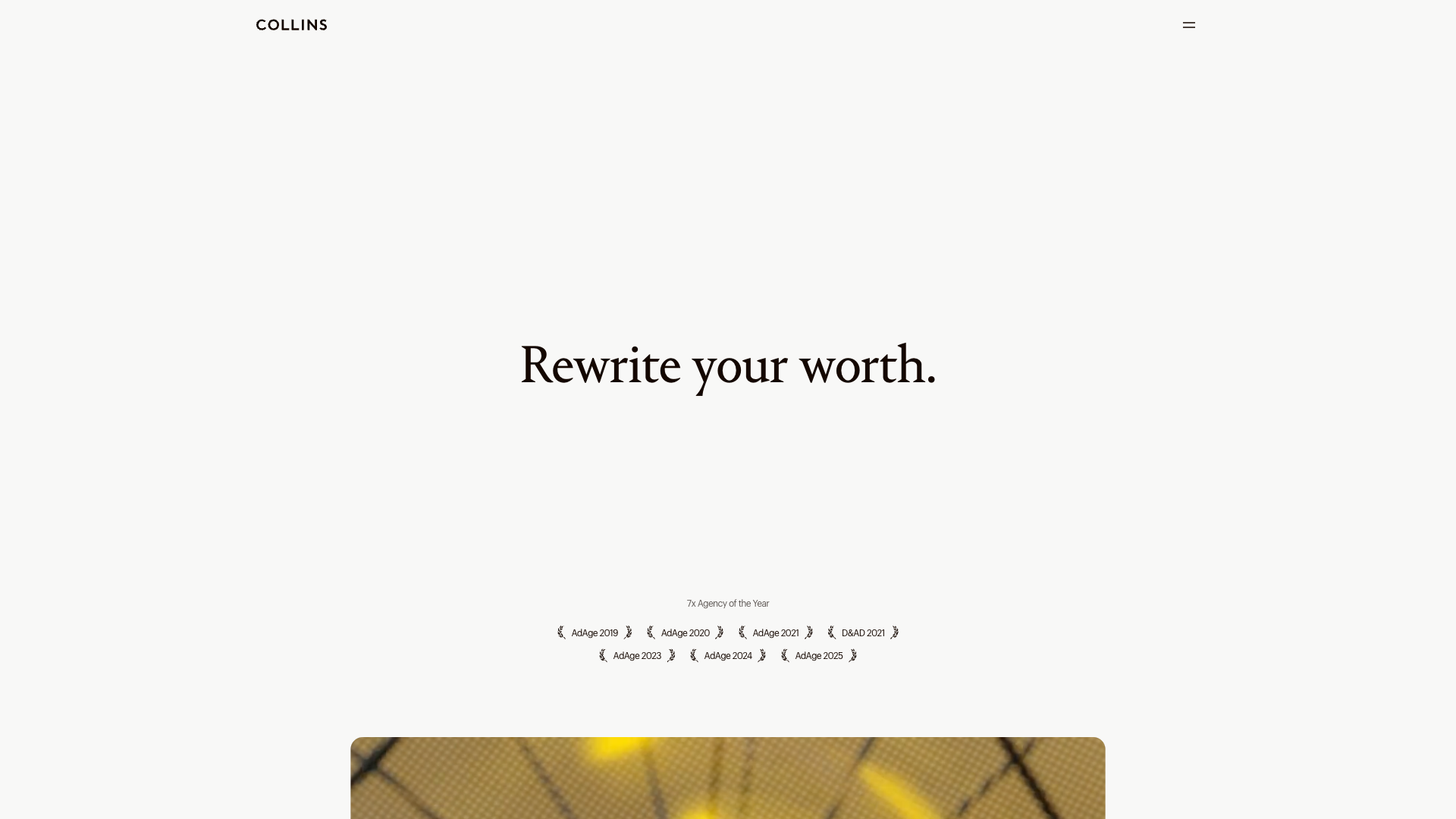
Why They’re #1: COLLINS has earned an unprecedented string of Agency of the Year awards—recognized seven times by Ad Age between 2019 and 2025, including winning the award in 2025. They’ve evolved from a design studio into a transformation consultancy, helping the world’s biggest brands reinvent themselves for modern markets. Their work with Spotify, Dropbox, and The Olympic Games demonstrates their ability to handle global brands at massive scale.
Key Services:
- Brand transformation and strategy
- Visual identity systems
- Packaging design
- Digital design and experiences
- Brand architecture
- Creative platforms and campaigns
Design Specialization: Brand transformation at enterprise scale—reimagining legacy brands for digital-first consumers
Notable Clients:
- Spotify
- Dropbox
- Levi Strauss & Co.
- CNN
- Hershey’s
- The Walt Disney Company
- Coca-Cola
- NBC Universal
- The Olympic Games
- Target
- Mattel
- IBM
- Microsoft
Team Size: ~227 employees
Pricing: Enterprise-level custom pricing; projects typically in six figures for major brand transformations
Best For: Fortune 500 companies and global brands needing comprehensive brand transformation with proven strategic approach.
Notable Achievements:
- Named Agency of the Year 7 times by Ad Age (2019, 2020, 2021 twice, 2023, 2024, 2025)
- D&AD’s Design Company of the Year
- Brand Transformation Consultancy of the Year
- Third consecutive year of record growth (2023-2025)
- Named Branding & Design Agency of the Year 6 times between 2019-2025
2. IDEO
Website: ideo.com
Headquarters: Palo Alto, California (with major studios in San Francisco, New York, and globally)
Founded: 1991
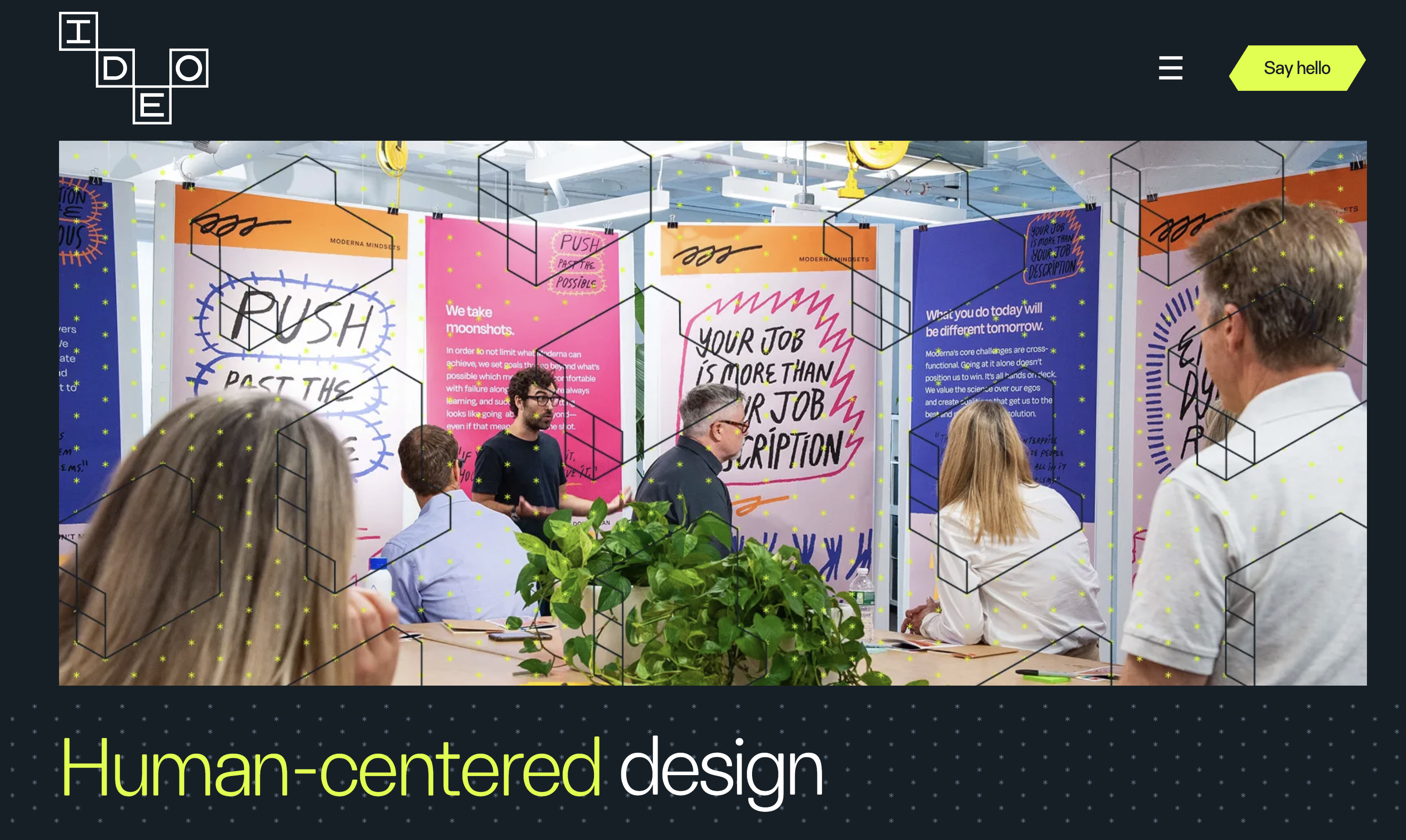
Why They’re #2: IDEO literally wrote the book on design thinking, pioneering the human-centered design methodology that’s now standard across industries. They designed Apple’s first mouse, created groundbreaking healthcare innovations, and transformed how companies approach product development. With multidisciplinary teams spanning engineering, design research, and behavioral science, IDEO tackles the world’s most complex innovation challenges.
Key Services:
- Human-centered design
- Innovation consulting
- Design thinking workshops
- Product design and development
- Service design
- Organizational design
- Digital transformation
Design Specialization: Human-centered design methodology and design thinking; innovation consulting for complex systemic challenges
Notable Clients:
- Apple
- Nike
- Coca-Cola
- Ford
- Medtronic
- Steelcase
- Air New Zealand
- Samsung
- Prada
Team Size: 500-600 employees globally
Pricing: Premium/enterprise pricing, typically six figures for major innovation projects
Best For: Organizations tackling complex innovation challenges requiring deep research, multidisciplinary expertise, and transformational thinking.
Notable Achievements:
- Invented design thinking methodology used globally
- Designed Apple’s first mouse (1982)
- Red Dot Design Awards
- Fast Company’s Most Innovative Companies
- 30+ years pioneering human-centered design
- Published influential books on design and innovation
3. Pentagram
Website: pentagram.com
Headquarters: New York, New York (with offices in London, San Francisco, Berlin, Austin)
Founded: 1972
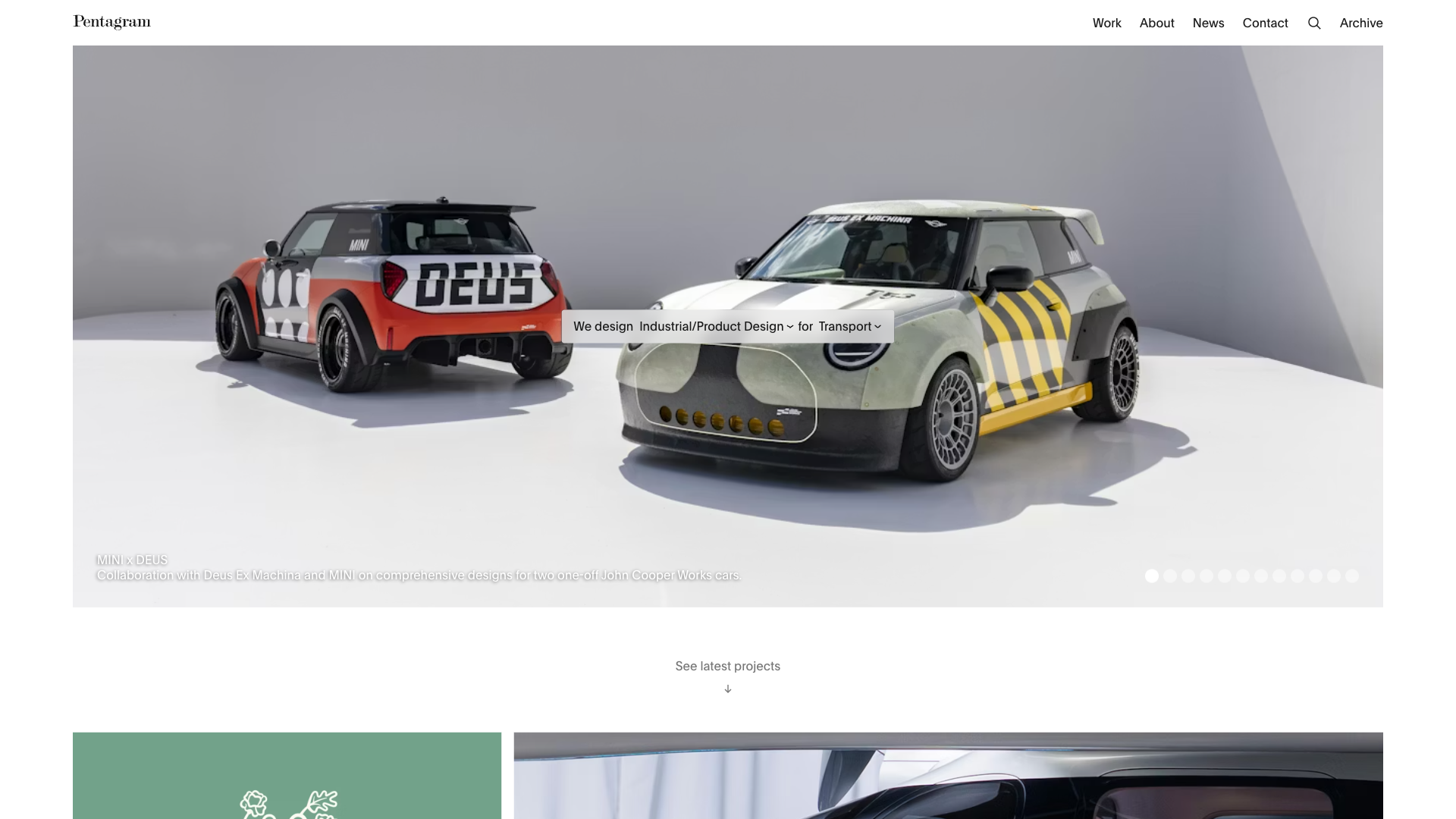
Why They’re #3: Pentagram’s unique partner-owned structure ensures every project receives senior-level attention from world-renowned designers. With 24 partners and a 50+ year legacy, they’ve created some of the world’s most iconic identities—from Mastercard’s rebrand to Windows’ visual system. Their multidisciplinary approach spans graphic design, architecture, and product design, making them one of the most versatile agencies globally.
Key Services:
- Brand identity and strategy
- Graphic design
- Architecture and interiors
- Product design
- Digital design
- Environmental graphics
- Packaging design
Design Specialization: World’s largest independent design consultancy with unique partner-owned structure; each partner leads specialized teams
Notable Clients:
- Mastercard
- Windows (Microsoft)
- Verizon
- The Rolling Stones
- Citibank
- Saks Fifth Avenue
- United Airlines
- The Public Theater
- Tiffany & Co.
- MIT Media Lab
- Barclays
Team Size: ~666 employees globally, 24 partners
Pricing: Premium pricing, typically six figures or more for major identity projects
Best For: Brands seeking iconic, enduring design from legendary designers with proven track records spanning decades.
Notable Achievements:
- 50+ year legacy in design excellence
- Multiple Cannes Lions, D&AD Awards, AIGA Medals
- DNA Award for integrating pro bono work
- Partner-owned structure ensures senior designer on every project
- Recent high-profile work: Channel 4 rebrand, Natural History Museum identity (2025)
4. frog design
Website: frog.co
Headquarters: San Francisco, California (part of Capgemini Invent)
Founded: 1969
Why They’re #4: frog design shaped modern consumer electronics design—they created Apple’s iconic “Snow White” design language in the 1980s and designed the Sony Walkman. With over 50 years of experience and 1,200+ employees globally, frog combines strategic innovation, product design, and digital experiences to help Fortune 500 companies transform. Their work spans physical products, digital platforms, and service design.
Key Services:
- Strategy and innovation
- Product design and development
- Digital experience design
- Service design
- Transformation consulting
- Design systems
- Industrial design
Design Specialization: Creative consultancy pioneering industrial and digital design for consumer electronics and enterprise transformation
Notable Clients:
- Apple (historic Snow White design language)
- Nike
- Microsoft
- Intel
- Disney
- Logitech
- Sky
- Visa
- UBS
- Unicef
Team Size: 1,200+ employees globally
Pricing: Enterprise-level pricing for major transformation projects
Best For: Companies needing integrated strategy, product design, and digital transformation from a legacy design powerhouse.
Notable Achievements:
- Created Apple’s “Snow White” design language (1984-1990)
- Designed Sony Trinitron TV and Sony Walkman
- Designed Disney MagicBands
- 50+ years pioneering consumer electronics design
- Part of Capgemini Invent’s global consulting network
5. Fantasy
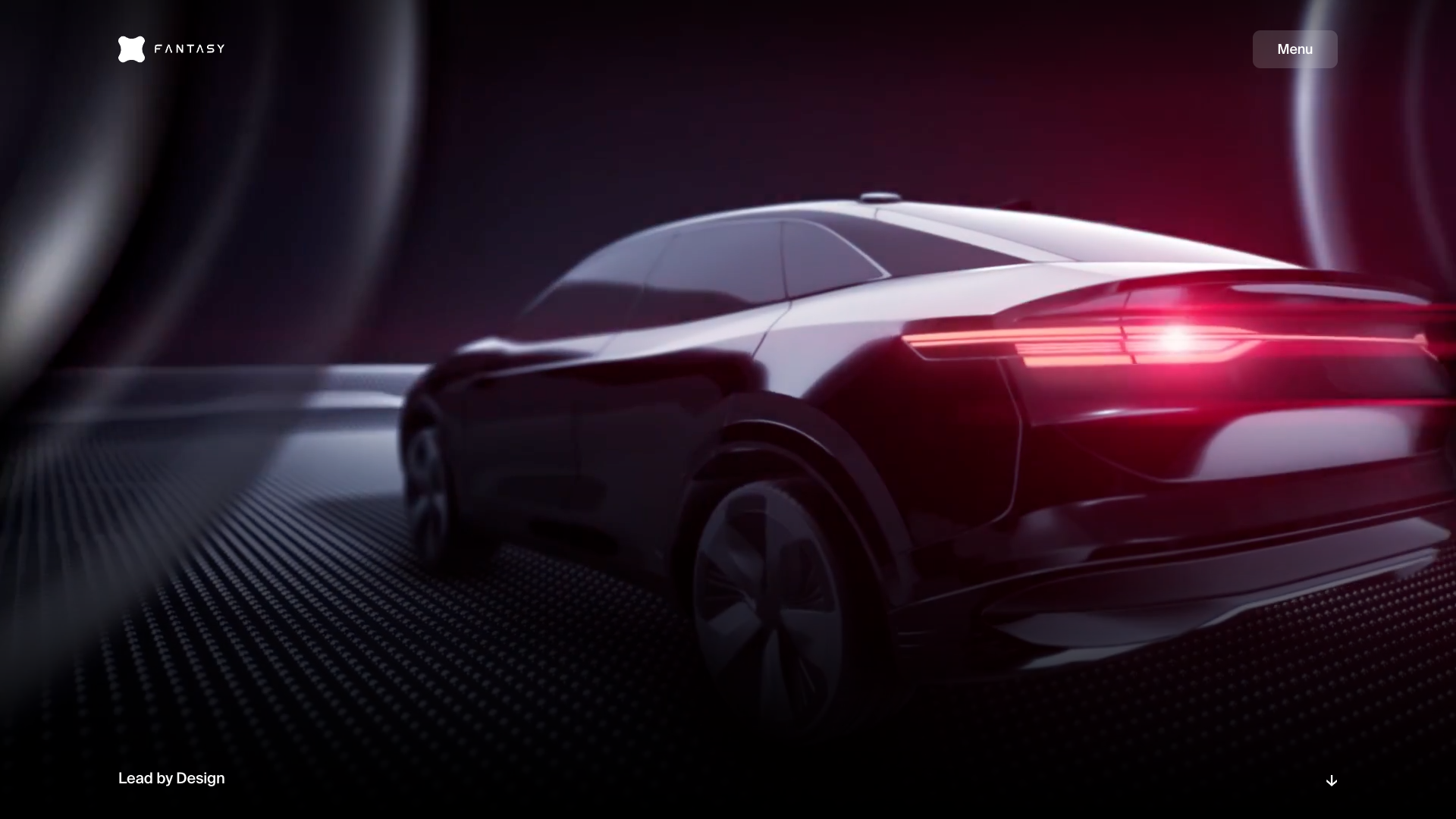
Website: fantasy.co
Headquarters: San Francisco, California (with studio in New York)
Founded: 1999
Why They’re #5: Fantasy has remained fiercely independent for 25+ years while designing products used by billions—from Netflix’s interface to Spotify’s mobile experience to Google’s design systems. Their boutique approach combines strategic thinking with world-class execution, attracting tech giants and innovative brands seeking transformational digital design. With over 200 industry awards and $41.7M revenue, Fantasy proves small teams can deliver massive impact.
Key Services:
- Product design and UX/UI
- Digital strategy
- Brand experiences
- Design systems
- AI-powered product experiences
- Mobile and web design
Design Specialization: Human-centered product design for digital products at massive scale; experiences used by billions
Notable Clients:
- Netflix
- Spotify
- Samsung
- Masterclass
- Meta
- Xbox
- Huawei
Team Size: Small elite team (~50-100 employees)
Pricing: Enterprise-level custom pricing
Best For: Tech companies and digital-first brands seeking boutique-level attention with enterprise-scale expertise and proven results.
Notable Achievements:
- 200+ industry awards
- Webby Awards for UX innovation
- Fast Company’s Innovation by Design
- Fiercely independent for 25+ years
- Products designed serve billions of users globally
- $41.7M revenue (2025)
6. Code and Theory
Website: codeandtheory.com
Headquarters: New York, New York (1 World Trade Center)
Founded: 2001
Why They’re #6: Code and Theory dominated design and innovation awards in 2025, earning seven Agency of the Year recognitions including “Most Decorated Agency of 2025” and Adweek’s inaugural Innovation Agency of the Year. Their unique model balances 50% creativity with 50% engineering, delivering digital-first solutions at scale with 1,500+ employees. They’re the go-to agency for Fortune 500 companies needing enterprise-grade digital transformation.
Key Services:
- Digital-first strategy
- Creative design and branding
- Technology development
- Product design and engineering
- Brand experiences
- Digital transformation
- AI and emerging technology
Design Specialization: Digital-first agency combining creativity and technology at scale; enterprise digital transformation
Notable Clients:
- Amazon
- JPMorgan Chase
- Microsoft
- MSNBC
- NFL
- Pfizer
- L’Oreal
- Burger King
- Bloomberg
- Qualcomm
- Thomson Reuters
Team Size: ~1,500 employees globally
Pricing: Enterprise-level pricing for major digital transformation initiatives
Best For: Large enterprises needing integrated creative, strategy, and technology capabilities for complex digital transformation projects.
Notable Achievements:
- Most Decorated Agency of 2025
- Adweek’s inaugural Innovation Agency of the Year (2025)
- Ad Age B2B Agency of the Year (2024 & 2025)
- ANA B2B Agency of the Year (2024 & 2025)
- Fast Company World’s Most Innovative Company (Design and Teamwork)
- Seven Agency of the Year achievements in 2025 alone
- Part of Stagwell Group network
7. Clay
Website: clay.global
Headquarters: San Francisco, California
Founded: 2016
Why They’re #7: Despite being relatively young (founded 2016), Clay has built an impressive client roster spanning Meta, Google, Slack, and Coinbase. Their remote-first model with senior-level designers distributed globally allows them to deliver enterprise-quality work at competitive rates. With transparent pricing starting at $10K and three flexible engagement models, Clay makes world-class design accessible to companies beyond Fortune 500 budgets.
Key Services:
- UX/UI design
- Branding and visual identity
- Web design and development
- Digital product development
- Brand strategy
- Mobile app design
Design Specialization: UI/UX design and branding for tech companies and startups to Fortune 100; boutique quality at scale
Notable Clients:
- Meta
- Slack
- Snapchat
- Coinbase
- Amazon
- Coca-Cola
- Sony
- T-Mobile
- Uber
- Toyota
- Samsung
Team Size: 10-50 employees (remote-first across US, Europe, Southeast Asia)
Pricing:
- Projects: $10,000 to $150,000+
- Retainers: Starting at $5,000/month
- Typical budget: $100,000-$500,000+
- Three engagement models: time & materials, fixed fee, retainer
Best For: Mid-market companies and growth-stage startups seeking boutique design quality with transparent pricing and flexible engagement models.
Notable Achievements:
- German Web Awards, Awwwards, Webby Awards (2025)
- Elite client roster despite being 8 years old
- Remote-first model with global senior talent
- Transparent pricing accessible to non-enterprise budgets
- Recognized for excellence in UI/UX and creative storytelling
8. Instrument
Website: instrument.com
Headquarters: Portland, Oregon (with offices in Brooklyn and Los Angeles)
Founded: 2006
Why They’re #8: Instrument has become the go-to agency for purpose-driven brands seeking exceptional digital experiences. Their client roster reads like a who’s who of innovative companies—Nike, Google, Spotify, Netflix, Patagonia, Stripe—brands that prioritize both aesthetics and values. With ~150 employees and a multidisciplinary approach spanning strategy, design, development, and content, Instrument delivers cohesive brand experiences across touchpoints.
Key Services:
- Brand strategy and positioning
- Digital design and UX
- Web and mobile development
- Content creation and storytelling
- Design systems
- Modern digital experiences
Design Specialization: Digitally native design agency for purpose-driven brands; modern digital experiences combining aesthetics and values
Notable Clients:
- Nike
- Oura
- ServiceNow
- EA
- Netflix
- Spotify
- Microsoft
- Patagonia
- Uber
- Marriott
- Sephora
- Sonos
- PayPal
- Levi’s
- NBA
- Nordstrom
- Stripe
- Salesforce
Team Size: ~150 employees
Pricing: Enterprise-level custom pricing
Best For: Purpose-driven brands seeking digitally native experiences that combine exceptional design with strong values and cultural relevance.
Notable Achievements:
- Fast Company’s Best Workplace for Women in Innovation
- Strong client retention with major tech and retail brands
- Values-driven multidisciplinary creative company
- Strong West Coast presence with bicoastal reach
- Known for high-quality digital experiences and brand work
9. Work & Co
Website: work.co
Headquarters: Brooklyn, New York (with offices in Portland, São Paulo, Copenhagen, LA, Atlanta)
Founded: 2013
Why They’re #9: Work & Co specializes in enterprise-grade digital products with exceptional design fidelity. Their tight design-to-development pipeline ensures pixel-perfect execution at scale—teams include product managers, designers, and developers from day one. Major companies like Apple, IKEA, Nike, and Mercedes-Benz trust Work & Co to build polished, scalable platforms. Acquired by Accenture in 2024, they now operate as part of Accenture Song.
Key Services:
- Digital product design and development
- Strategy and product management
- Design systems at scale
- Mobile and web platforms
- Enterprise digital transformation
- Full-service product development
Design Specialization: Enterprise-grade digital products with high design fidelity; seamless design-to-dev pipeline
Notable Clients:
- Apple
- IKEA
- Nike
- Gatorade
- Mercedes-Benz
- Virgin America
- Burger King
Team Size: ~400-425 employees
Pricing: Enterprise-level, long-term projects requiring significant budgets (typically $100K+)
Best For: Large enterprises wanting polished, scalable digital platforms with seamless design-to-development execution and ongoing product evolution.
Notable Achievements:
- Award-winning Portland office design (one of world’s 10 best office interiors by Dezeen)
- Acquired by Accenture in 2024, now part of Accenture Song
- Known for shipping high-quality products at enterprise scale
- Tight design-dev pipeline with multidisciplinary teams
- Strong reputation for design fidelity and technical execution
10. Smart Design
Website: smartdesignworldwide.com
Headquarters: Brooklyn, New York
Founded: 1980
Why They’re #10: Smart Design achieved legendary status by pioneering universal design principles with the OXO Good Grips line in 1989—products now in permanent collections at MoMA and Cooper Hewitt. With 40+ years of experience, they bridge physical and digital product design, helping brands like Ford, Samsung, and PepsiCo create human-centered innovations. Their work spans industrial design, UX design, and strategic design consulting.
Key Services:
- Strategic design and innovation
- Industrial design
- Product design (physical and digital)
- UX and interaction design
- Human-centered research
- Innovation consulting
Design Specialization: Product design and industrial design; human-centered approach to physical and digital products
Notable Clients:
- OXO
- Ford
- HP
- Gatorade
- Samsung
- PepsiCo
- Johnson & Johnson
- Gillette
- Pyrex
- NYC Taxi & Limousine Commission
Team Size: ~53 employees
Pricing: Enterprise/mid-market custom pricing
Best For: Companies developing physical products, consumer goods, or integrated physical-digital experiences requiring deep human-centered research.
Notable Achievements:
- 2010 National Design Award for Product Design from Smithsonian’s Cooper Hewitt
- OXO Good Grips in permanent collections at Cooper Hewitt and MoMA
- Designed iconic NYC “Taxi of Tomorrow” (2012)
- Pioneered universal design principles (1989)
- 40+ year legacy in industrial design
- Products used by millions daily worldwide
Why Choose a US-Based Design Agency?
Cultural Fluency and Market Understanding
US-based design agencies understand American consumers, cultural nuances, and market dynamics that international agencies may miss. They know how American audiences respond to visual communication, what resonates emotionally, and how to navigate cultural sensitivities. This cultural fluency is critical for brands targeting US markets—from understanding regional preferences to aligning with current social movements.
Real-Time Collaboration and Communication
Working with agencies in US time zones enables synchronous collaboration. Design is inherently iterative, requiring frequent feedback cycles, creative brainstorming sessions, and stakeholder reviews. When your agency operates during your business hours, you get:
- Immediate feedback loops: Review designs in real-time, not overnight
- Live creative sessions: Participate in workshops, brainstorms, and design sprints
- Faster iteration: Multiple design rounds in days instead of weeks
- Better stakeholder alignment: Executives can attend presentations without scheduling conflicts
Access to America’s Design Talent Pool
The US design ecosystem benefits from top design schools (RISD, Parsons, ArtCenter, Carnegie Mellon), active design communities, and competitive salaries that attract global talent. US agencies recruit from America’s diverse talent pool, bringing multicultural perspectives while understanding US market needs. Many agencies also have alumni from major tech companies (Apple, Google, Meta) who bring cutting-edge digital design expertise.
Intellectual Property Protection and Legal Clarity
US copyright and trademark laws provide strong protections for design work and brand assets. Contracts governed by US law offer predictable enforcement and clear ownership terms. For companies investing significantly in brand development or product design, keeping projects domestic reduces IP risks and simplifies legal agreements.
Proximity for Critical Touchpoints
While much design work happens remotely, certain moments benefit from in-person collaboration: kickoff workshops, stakeholder alignment sessions, usability testing with local users, and final presentations to executives. US-based agencies can travel for critical touchpoints or host on-site sessions without international travel complexity and expense.
How to Choose the Right US Design Agency
Step 1: Define Your Design Challenge and Objectives
Be specific about what you need design to accomplish:
- Brand transformation: “Rebrand our 50-year-old company for millennial and Gen Z consumers”
- Digital product: “Design a mobile app for healthcare professionals with 95%+ task completion rate”
- Physical product: “Create an ergonomic consumer product that works for diverse abilities”
- Digital experience: “Redesign our e-commerce site to increase conversion by 30%”
Clear objectives help agencies propose relevant approaches and demonstrate relevant experience.
Step 2: Evaluate Portfolio Quality and Relevance
Design portfolios reveal an agency’s aesthetic sensibility, problem-solving approach, and execution capabilities. Look for:
- Visual excellence: Does their work set high design standards?
- Strategic thinking: Do case studies explain the “why” behind design decisions?
- Relevant challenges: Have they solved problems similar to yours?
- Measurable outcomes: Do they share business results, not just pretty pictures?
- Range vs. specialization: Do you need a specialist or generalist approach?
Don’t just look at award-winning work—review everyday client projects to assess consistency.
Step 3: Assess Strategic Capabilities Beyond Aesthetics
Great design agencies think strategically, not just visually. Ask about their process:
- Discovery and research: How do they understand users, markets, and competitive landscape?
- Strategy development: How do they define design principles and creative direction?
- Stakeholder alignment: How do they build consensus among executives and teams?
- Success metrics: How do they measure design effectiveness?
- Business integration: How does design connect to broader business objectives?
Agencies that lead with questions (not solutions) demonstrate strategic thinking.
Step 4: Review Client References and Case Studies
Request 3-5 client references for projects similar in scope and industry. Ask references:
- “How did the design impact your business metrics?”
- “How collaborative was the agency? Did they listen and iterate?”
- “How did they handle unexpected challenges or feedback?”
- “What was the quality of their final deliverables?”
- “Would you hire them again for your next project?”
Look for specific outcomes: “25% increase in conversion,” “successful product launch,” “brand refresh drove 40% more awareness.”
Step 5: Understand Team Structure and Who You’ll Work With
Agency reputation matters less than who actually works on your project. Ask:
- “Who will lead my project day-to-day?”
- “Will I work with senior designers or junior team members?”
- “What’s the ratio of partners/principals to my project hours?”
- “How do you staff projects—dedicated teams or floating resources?”
- “Can I meet the team before committing?”
Some agencies promise celebrity designers but staff projects with junior teams. Ensure senior talent commitment.
Step 6: Evaluate Process, Timeline, and Collaboration Style
Understand how the agency works:
- Design process: What phases do they follow? (Discovery, strategy, design, testing, delivery)
- Timeline expectations: Typical project lengths for work like yours (3-6 months for rebrands, 2-4 months for website redesigns)
- Collaboration tools: What platforms for sharing work, giving feedback, managing projects?
- Iteration philosophy: How many design rounds? How do they handle feedback?
- Handoff and documentation: What deliverables do you receive? (Design files, brand guidelines, design systems)
Ensure their process aligns with your team’s way of working.
Step 7: Compare Pricing Models and Understand True Costs
Design agencies use different pricing structures:
Project-based fees: Fixed price for defined scope ($50K-$500K+ depending on project)
- Best for: Well-defined projects with clear deliverables
- Risk: Scope creep can cause conflicts
Retainer agreements: Monthly fee for ongoing design support ($10K-$100K/month)
- Best for: Continuous design needs, evolving products, long-term partnerships
- Risk: Underutilization if work volume fluctuates
Hourly rates: $150-$400/hour depending on seniority and agency
- Best for: Flexible scopes, exploratory projects, ongoing support
- Risk: Costs can escalate without careful management
Value-based pricing: Fee tied to project impact (rare in design)
- Best for: Projects with clear ROI metrics
- Risk: Difficult to measure design’s isolated impact
Get detailed proposals comparing total investment, what’s included, and payment terms.
Red Flags to Avoid When Hiring US Design Agencies
Generic Portfolios Without Strategic Storytelling
Red flag: Agency shows beautiful work but can’t explain the strategy, challenges, or business impact behind designs
Reality: Great design solves problems, not just decorates. Agencies should articulate the “why” behind every design decision, demonstrating strategic thinking alongside visual execution.
Overpromising Results Without Research
Red flag: “We’ll design you an award-winning brand” or “Our design will double your revenue” before understanding your business
Reality: Ethical agencies acknowledge that design outcomes depend on many factors. They propose research phases to understand your challenges before promising specific results.
No Process or Methodology Discussion
Red flag: Agency jumps straight to concepts and mockups without discussing discovery, research, or strategic phases
Reality: Professional design agencies follow structured processes. Skipping discovery leads to uninformed design that misses the mark. Agencies should explain their methodology before showing portfolio work.
Unclear IP and Asset Ownership Terms
Red flag: Vague contract language about who owns final designs, source files, fonts, and brand assets
Reality: You should own all final design deliverables and have perpetual rights to use them. Review contracts carefully—some agencies retain ownership or charge for source files. Clarify font licensing and stock imagery rights.
No Client References or Case Studies
Red flag: “Our clients are under NDA” or unwillingness to provide any verifiable references
Reality: Legitimate agencies have permission from clients to share case studies (even anonymized) or provide references. While some details may be confidential, they should demonstrate relevant experience.
Team Bait-and-Switch
Red flag: Senior partners present in pitch meetings but junior designers staff your actual project
Reality: Ask explicitly who will work on your project day-to-day and what percentage of time senior leaders contribute. Some agencies use famous names to win business but delegate to junior staff. Get team commitments in writing.
Pricing Expectations for US-Based Design Agencies
Small-Scale Design Projects ($10,000 - $50,000)
Scope: Logo design, website redesigns, basic brand identity, marketing materials
Examples:
- Small business logo and brand identity
- WordPress website redesign
- Marketing collateral and templates
- Social media brand assets
Timeline: 1-3 months
Best for: Small businesses, startups, or single-deliverable projects
Mid-Market Design Projects ($50,000 - $150,000)
Scope: Comprehensive brand identity, UX/UI design, product design, digital experiences
Examples:
- Complete brand identity with guidelines
- Mobile app UX/UI design
- E-commerce website design and development
- Product packaging system
Timeline: 3-6 months
Best for: Growing companies, product launches, or mid-market rebrands
Enterprise Design Transformations ($150,000 - $500,000+)
Scope: Major brand transformations, complex digital products, design systems, multi-platform experiences
Examples:
- Fortune 500 brand transformation
- Enterprise design system
- Multi-platform digital product (web, mobile, tablet)
- Brand architecture for portfolio of sub-brands
Timeline: 6-18 months
Best for: Large enterprises, major rebrands, or complex product ecosystems
Premium/Iconic Agency Projects ($500,000 - $2,000,000+)
Scope: Transformational work with legendary agencies; global brand launches; groundbreaking products
Examples:
- Global brand transformation with COLLINS, Pentagram, or IDEO
- Innovative product design creating new categories
- Olympic Games brand identity
- Multi-year transformation partnerships
Timeline: 12-24+ months
Best for: Fortune 100 companies, global brands, or once-in-a-generation transformations
Ongoing Retainer Relationships
Many brands maintain ongoing relationships with design agencies:
- Small retainer: $5,000-$15,000/month for marketing design support
- Mid-level retainer: $15,000-$50,000/month for product design and UX
- Enterprise retainer: $50,000-$150,000+/month for comprehensive design partnership
Best for: Companies with continuous design needs, evolving products, or long-term strategic partnerships
Conclusion
The United States leads the world in design innovation, and these top 10 agencies represent the pinnacle of American design excellence. From COLLINS’s transformational branding to IDEO’s pioneering design thinking to Pentagram’s iconic identities, each agency brings unique strengths to different design challenges.
When choosing your design partner, prioritize agencies with:
- ✅ Portfolio demonstrating excellence in your specific design challenge
- ✅ Strategic thinking beyond aesthetics
- ✅ Proven track record with measurable business outcomes
- ✅ Senior team members committed to your project
- ✅ Clear process, transparent pricing, and collaborative approach
Remember that great design isn’t just about making things beautiful—it’s about solving problems, driving business results, and creating experiences that resonate with real people. The right design partner becomes an extension of your team, challenging assumptions, elevating thinking, and delivering work that transforms your brand.
Next Steps
Ready to find your ideal design partner?
- Define your challenge: Document specific design goals and success metrics
- Set your budget: Determine realistic investment based on project scope
- Review portfolios: Explore work from agencies on this list matching your needs
- Shortlist 3-5 agencies: Select based on relevant experience and aesthetic fit
- Request proposals: Share detailed briefs and compare approaches
- Check references: Speak with past clients about their experiences
- Meet the team: Ensure chemistry with people who’ll actually work on your project
- Start with discovery: Begin with paid discovery/strategy phase before committing to full execution
For additional guidance on design agency selection, explore our related articles on brand strategy, UX design best practices, and digital transformation.
Last updated: December 16, 2025